

Bangladesh’s ready-made garment industry operates in an environment shaped by tight production schedules, detailed quality requirements, changing buyer expectations, and increasing global competition. In this setting, digital capability is becoming an important part of how apparel professionals plan, communicate, and solve operational problems.
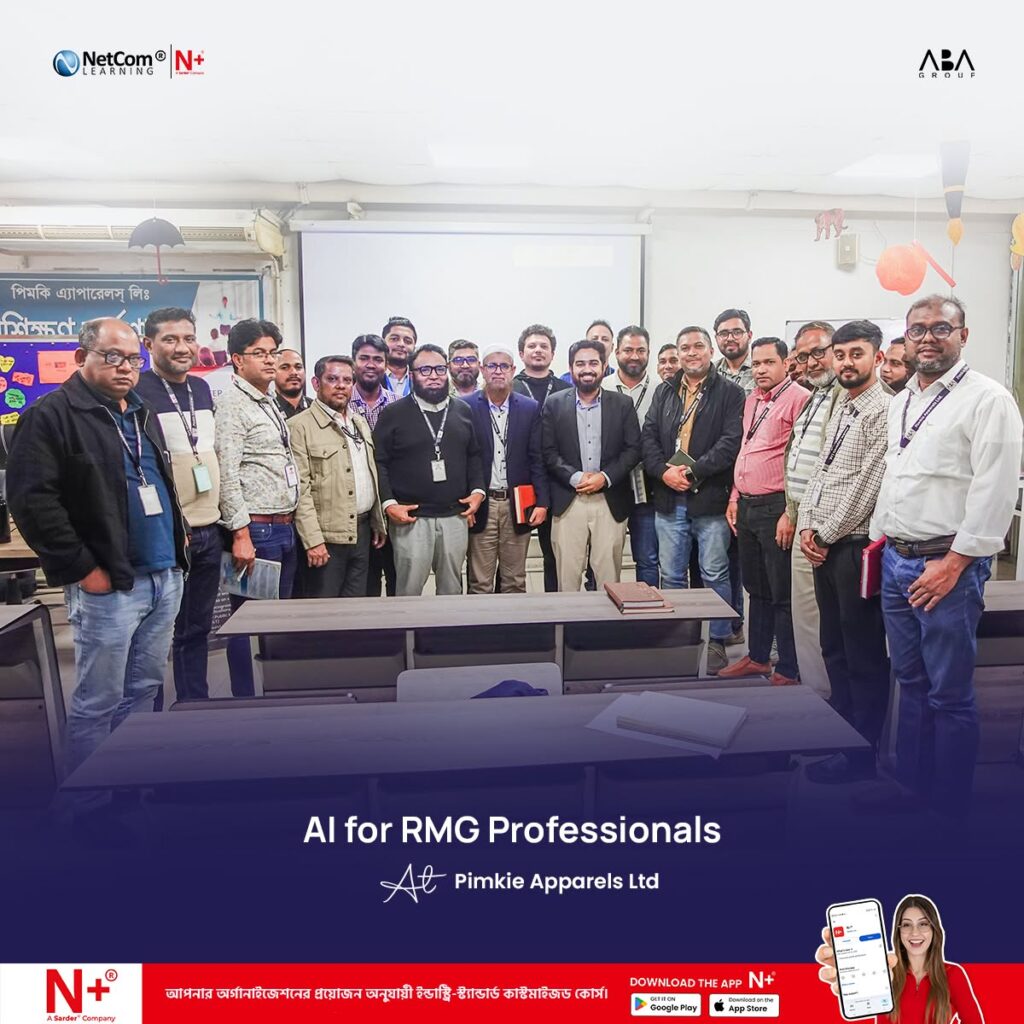
To help its team explore these possibilities, Pimkie Apparels Ltd., a sister concern of ABA Group, hosted a specialized session on “AI for RMG Professionals” at its facility in Tongi. The program was facilitated by NetCom Learning Bangladesh.
The session introduced participants to practical ways artificial intelligence can support apparel manufacturing workflows. The discussion covered production planning, quality-related documentation, report preparation, data analysis, internal communication, and the organization of information across different stages of manufacturing.
Participants also explored how generative AI can assist with drafting standard operating procedures, summarizing approved documents, preparing production updates, structuring meeting notes, and developing initial reports. These applications can reduce repetitive work while allowing professionals to concentrate on analysis, coordination, and problem-solving.
AI-assisted analysis may also help teams examine production data, identify recurring patterns, and support planning. However, recommendations related to production targets, material use, quality acceptance, safety, or compliance must always be verified against reliable operational data and reviewed by experienced professionals.
Khan Tanvir, Subject Matter Expert and AI CERTs® Certified Trainer, led the session through practical examples tailored to the RMG sector. He helped participants understand how AI can complement existing apparel expertise and where its limitations require human judgment.
The program also addressed responsible use. Buyer information, product designs, pricing, employee records, production figures, and compliance documents should only be processed through approved and secure systems. AI-generated content must be reviewed for accuracy, confidentiality, relevance, and alignment with organizational standards.
Adopting AI in apparel manufacturing is not simply about using new tools. It requires clear business objectives, reliable data, capable employees, responsible governance, and measurable implementation plans. Technology creates value when it strengthens—not bypasses—the knowledge of professionals working across the production process.
By introducing its team to practical AI applications, Pimkie Apparels Ltd. is taking a thoughtful step toward developing future-ready capabilities within its workforce. The session created an opportunity to connect established manufacturing experience with emerging digital methods relevant to Industry 4.0.
We appreciate the collaboration with Pimkie Apparels Ltd. and recognize the contributions of Jafar Imam Sajal and Abdullah Al Nomaan in coordinating the program.

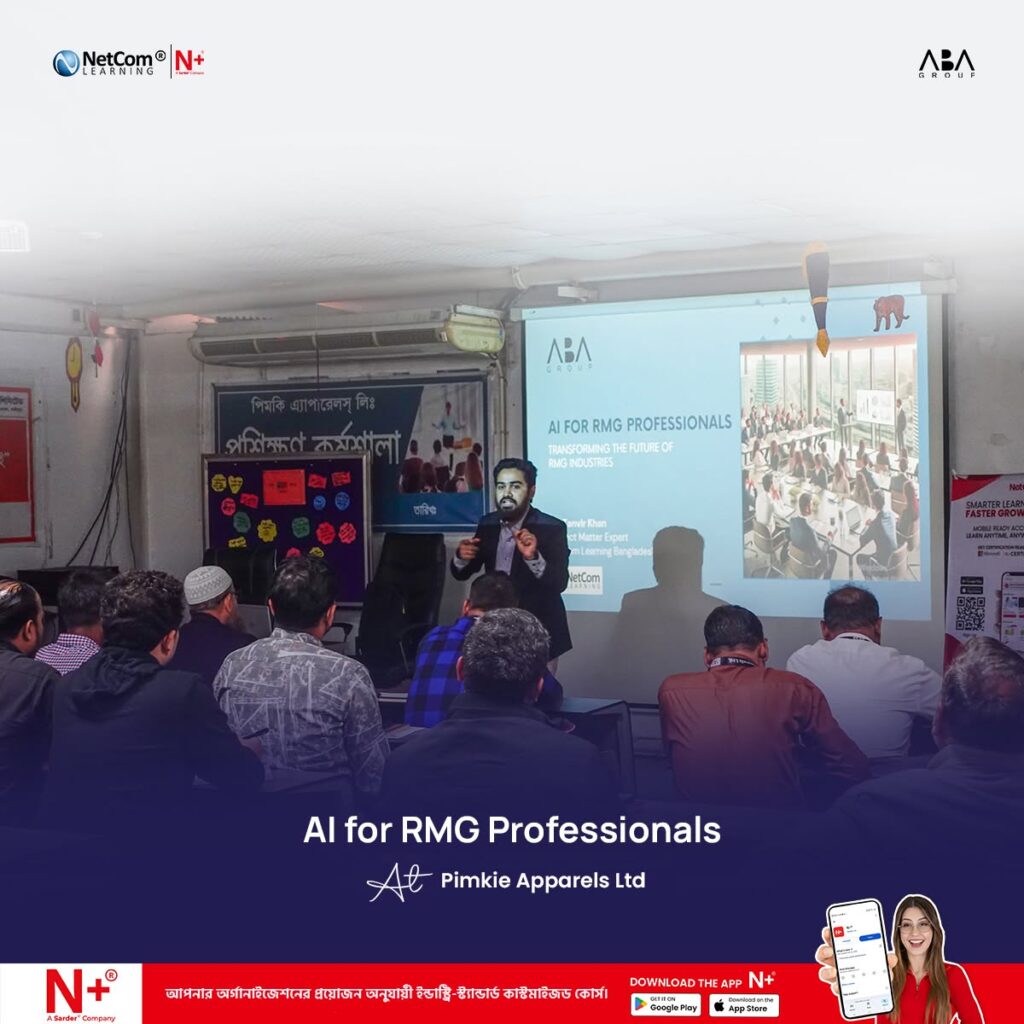
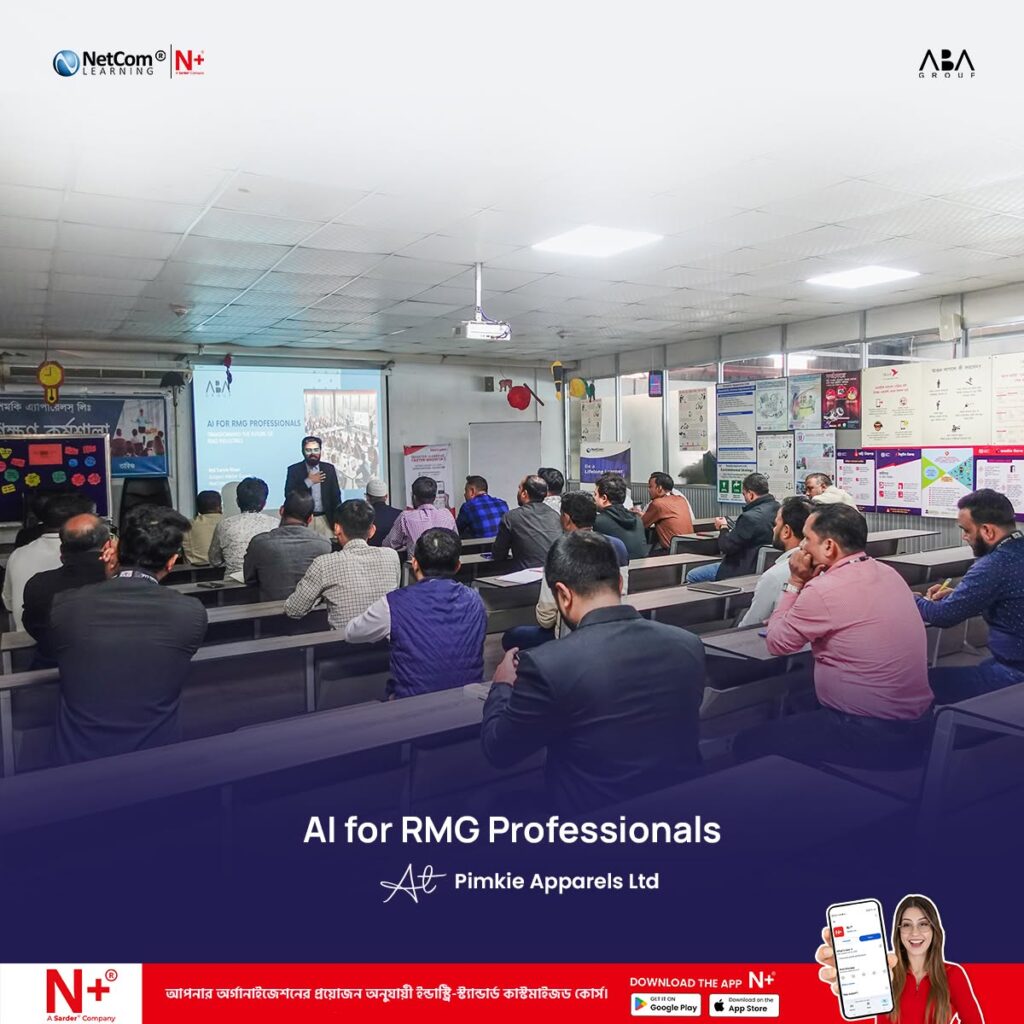

Here are a few glimpses from the AI for RMG Professionals session at Pimkie Apparels Ltd. in Tongi.
Leave a Reply