

Large-scale development programs depend on accurate reporting, effective coordination, responsible data management, and timely communication. When these activities become heavily manual, development professionals may have less time to focus on planning, field engagement, and the communities their programs are designed to support.
To explore how artificial intelligence can assist with these responsibilities, Palli Karma-Sahayak Foundation (PKSF) hosted a two-day “AI Training for Workplace Productivity” program at the PKSF Auditorium. The training was conducted by NetCom Learning Bangladesh and tailored to the practical needs of development professionals.
Across the two days, participants explored how generative AI can support routine workplace activities such as document summarization, report structuring, information organization, research assistance, meeting preparation, and professional communication.
The training also examined how AI can assist with initial drafts of project reports and other documentation. Participants learned that generated content must always be compared with source records, project frameworks, organizational policies, and reporting requirements before it is approved or shared.
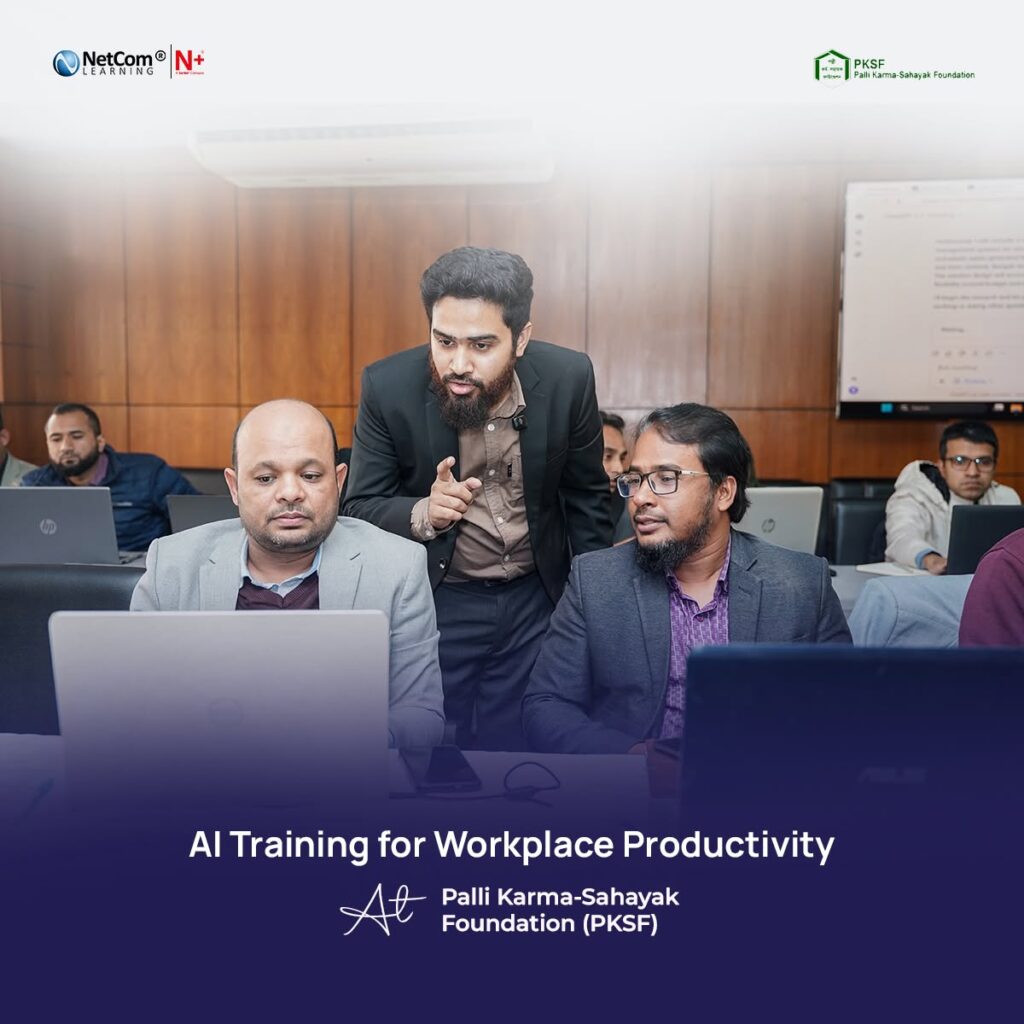
Khan Tanvir and Md. Shihab Reza, AI CERTs® Certified Trainers, led the program through demonstrations and practical exercises. Their sessions focused on helping participants develop usable skills rather than limiting the discussion to general AI concepts.
Effective prompting was another important part of the program. Participants explored how clearly defining the task, context, audience, available evidence, constraints, and required format can improve the relevance of AI-generated responses.
The training also addressed the limitations of generative AI. These systems can produce inaccurate information, unsupported statistics, incomplete summaries, or fabricated references. Every important output therefore requires verification by a responsible professional with knowledge of the relevant project and context.
Information governance remained central throughout the program. Beneficiary records, partner information, financial details, project data, evaluation findings, and unpublished documents should only be handled through approved and secure systems. Personally identifiable or sensitive information should be minimized or anonymized wherever appropriate.
AI should support development professionals—not replace their understanding of communities, field realities, institutional priorities, or social context. Its practical value lies in reducing avoidable administrative effort while preserving accountability and human judgment.
By arranging this two-day program, PKSF created an opportunity for its team to examine how AI may be incorporated into daily work thoughtfully and responsibly. Building these capabilities can support clearer documentation, more efficient knowledge work, and stronger organizational readiness for digital transformation.
We appreciate the trust shown by PKSF and recognize the contributions of Jafar Imam Sajal, Business Development Executive; Peyal Sarker, Training Coordinator; and Tarif Hasan Nayeem, who provided media coverage for the program.
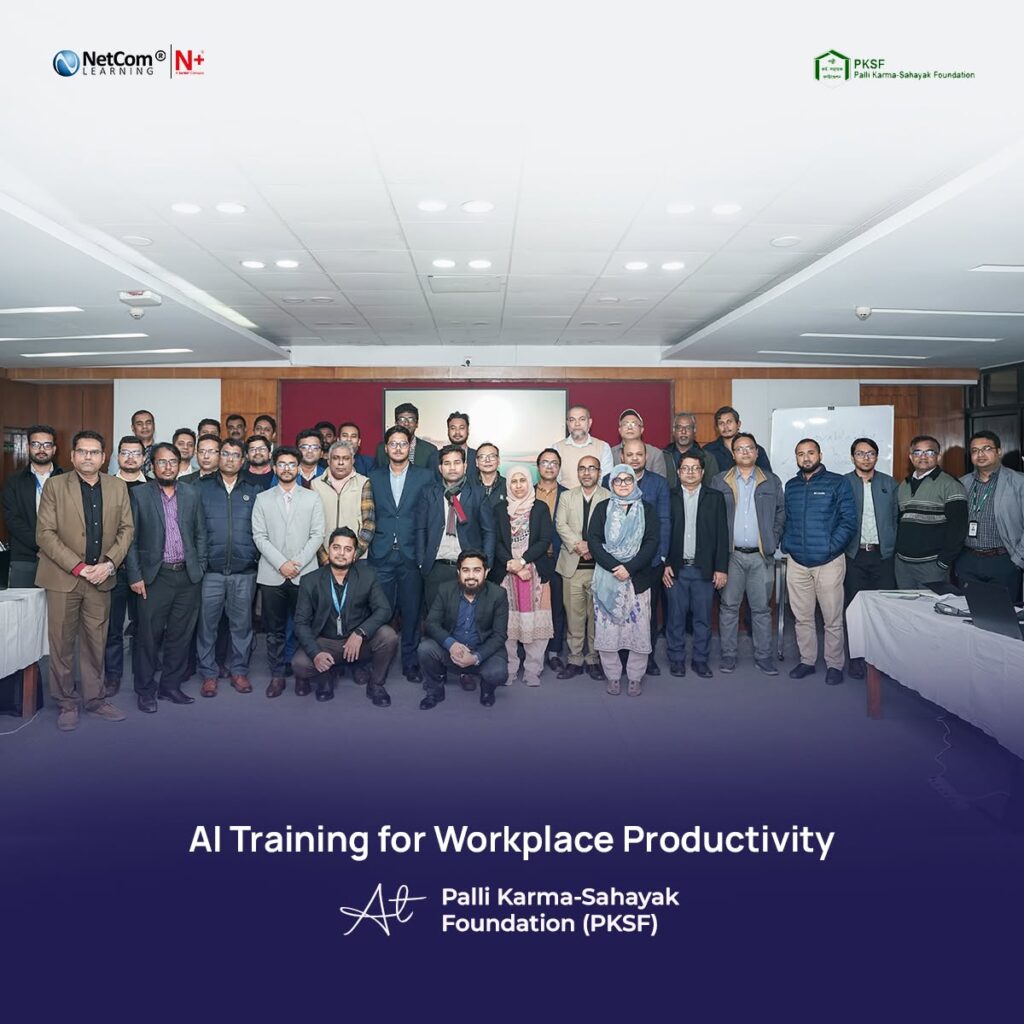
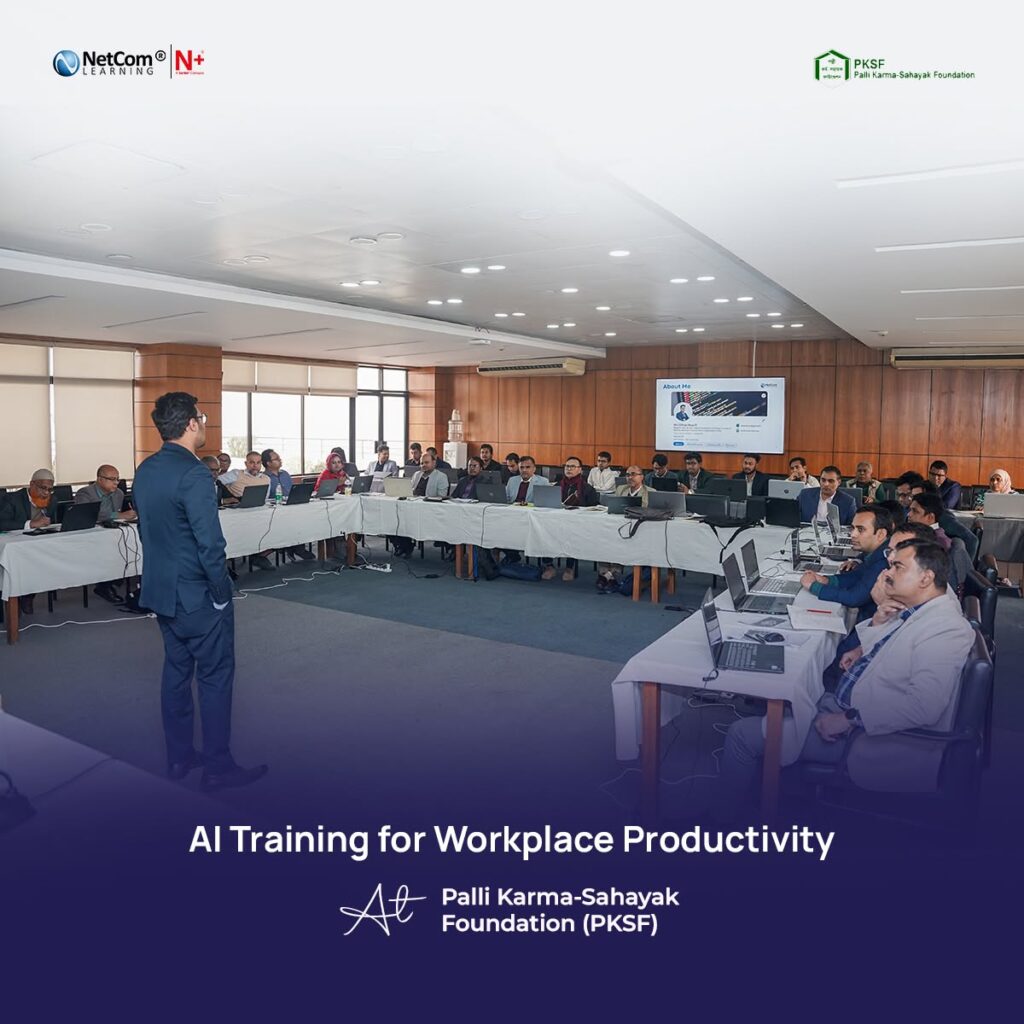
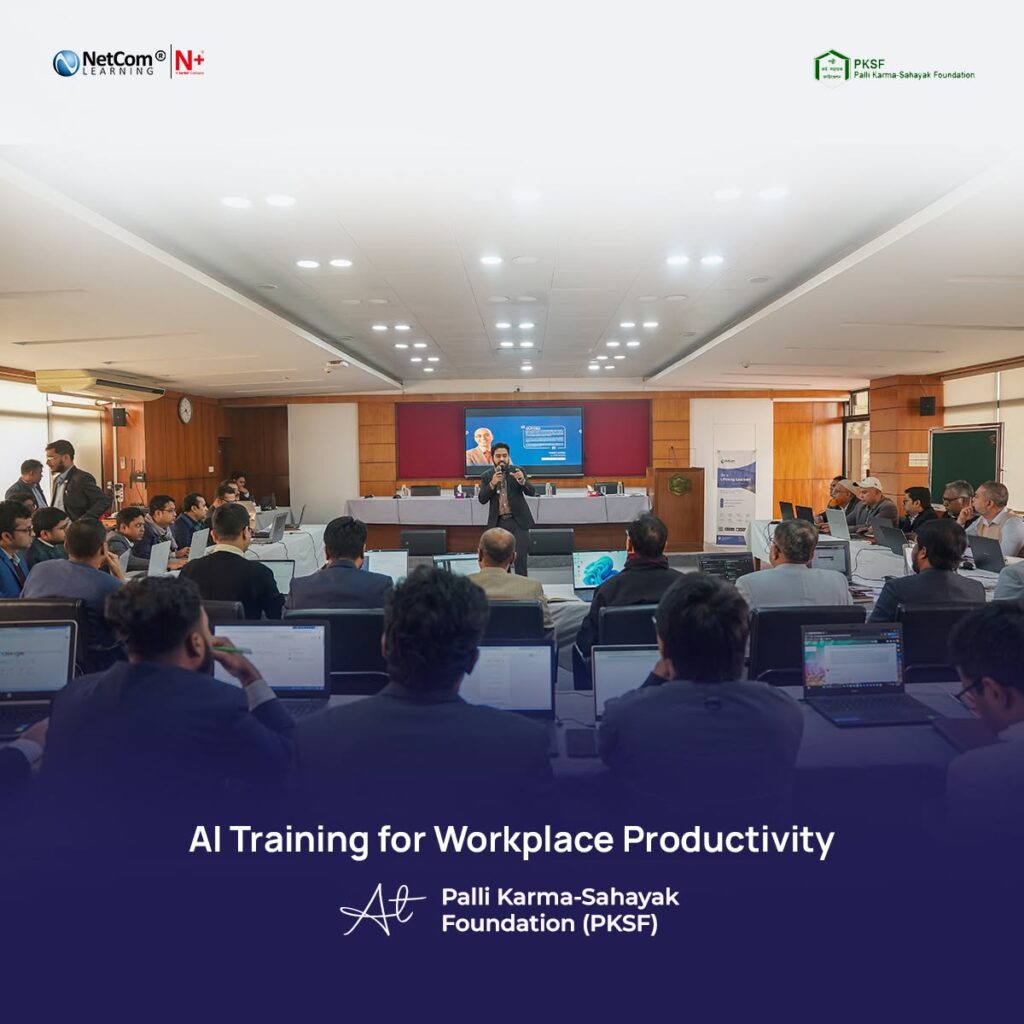
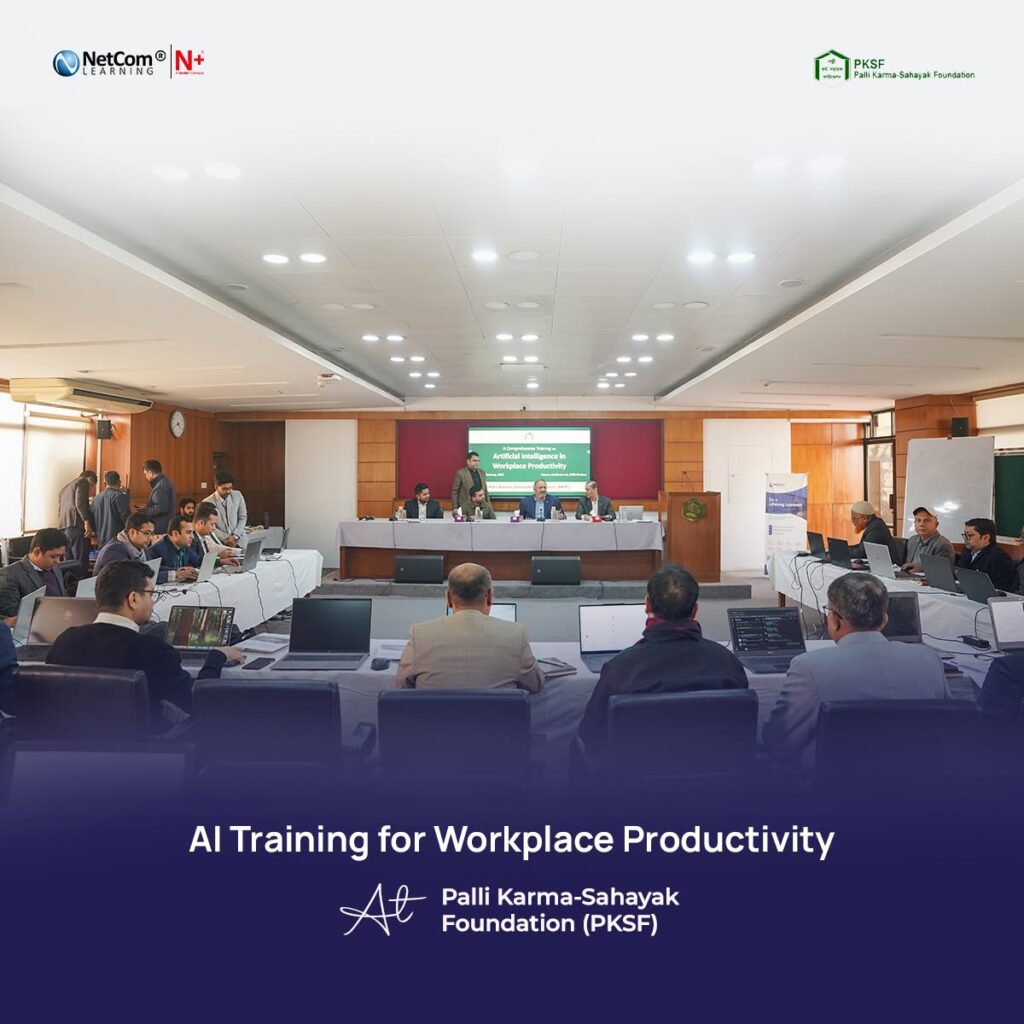
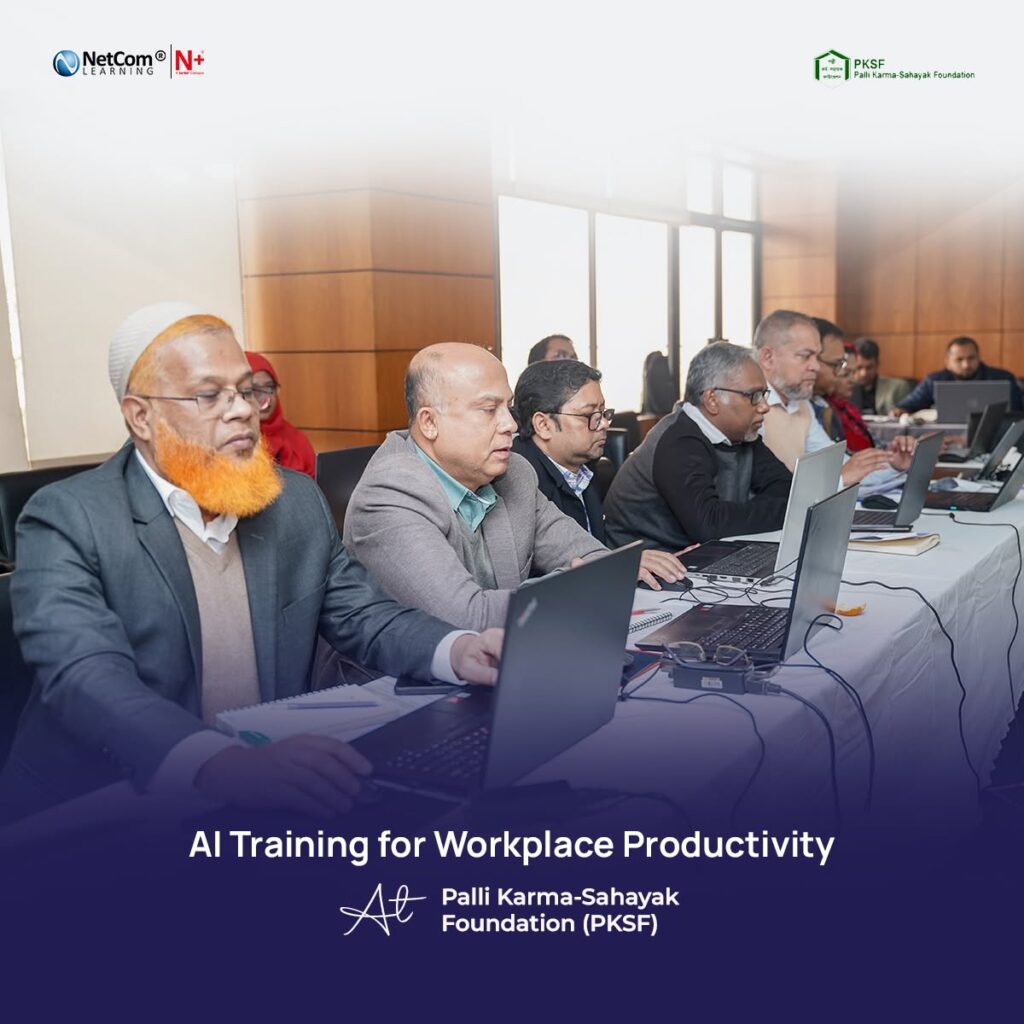
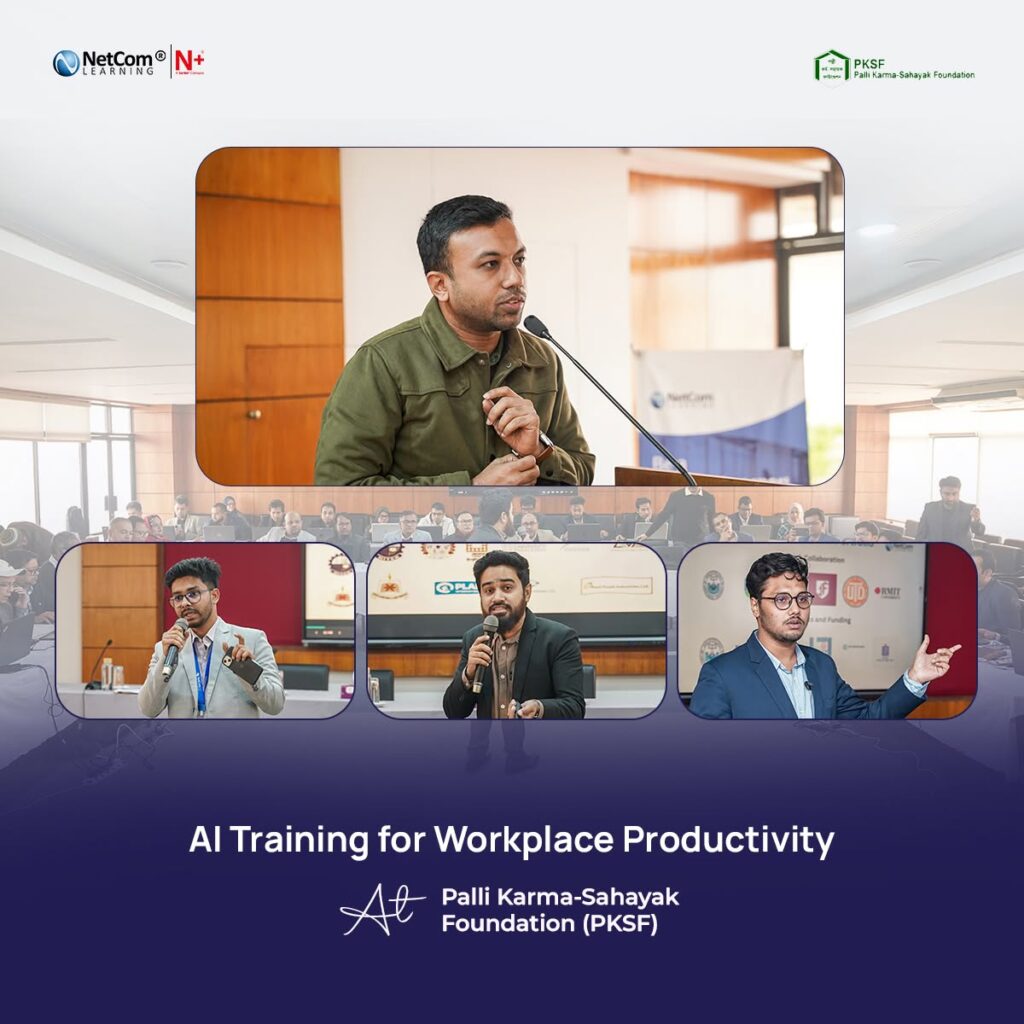
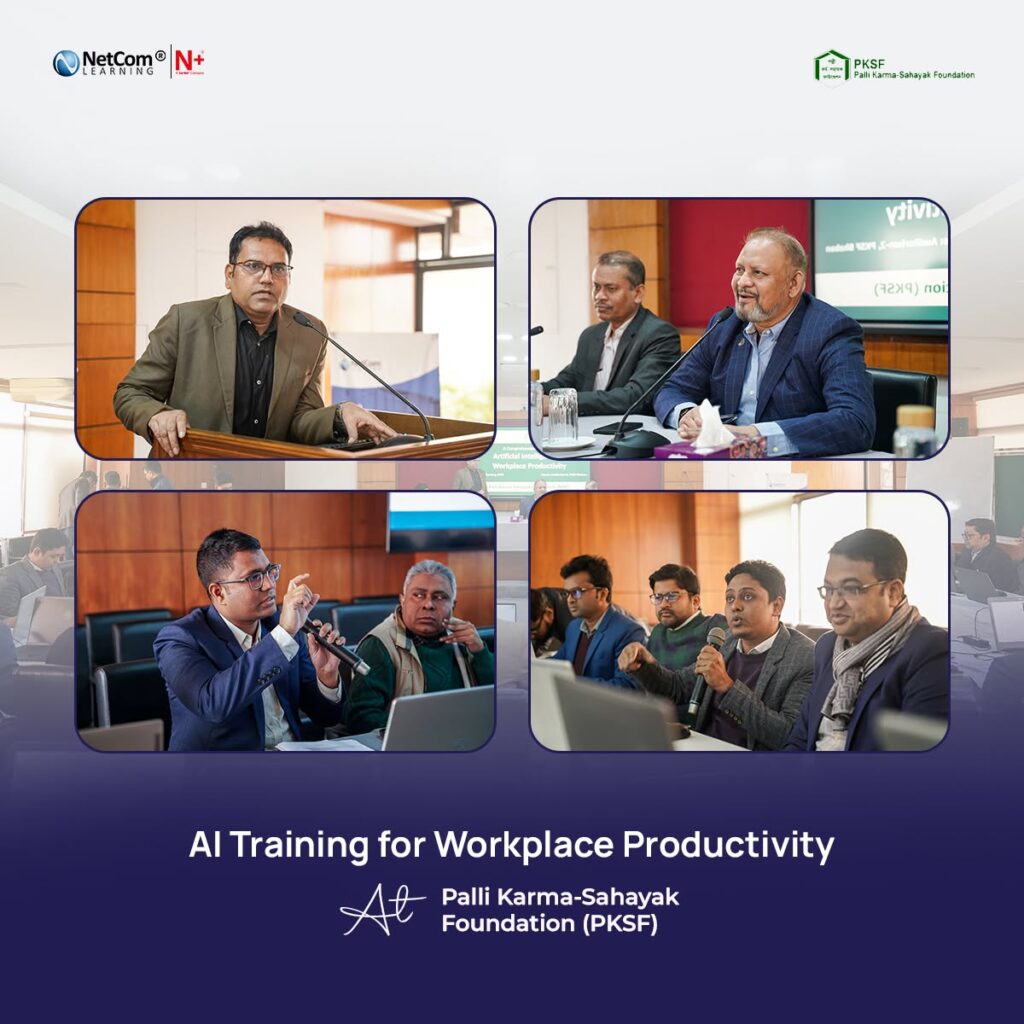
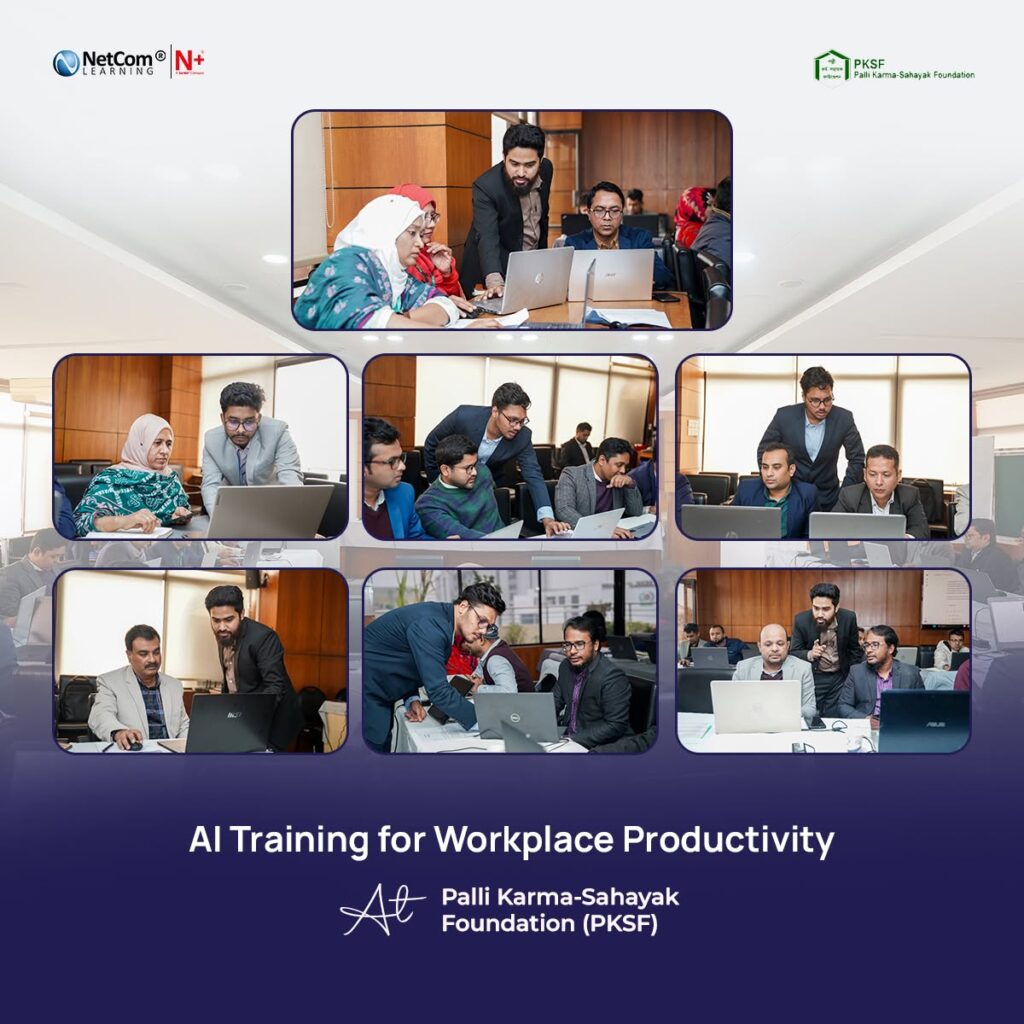
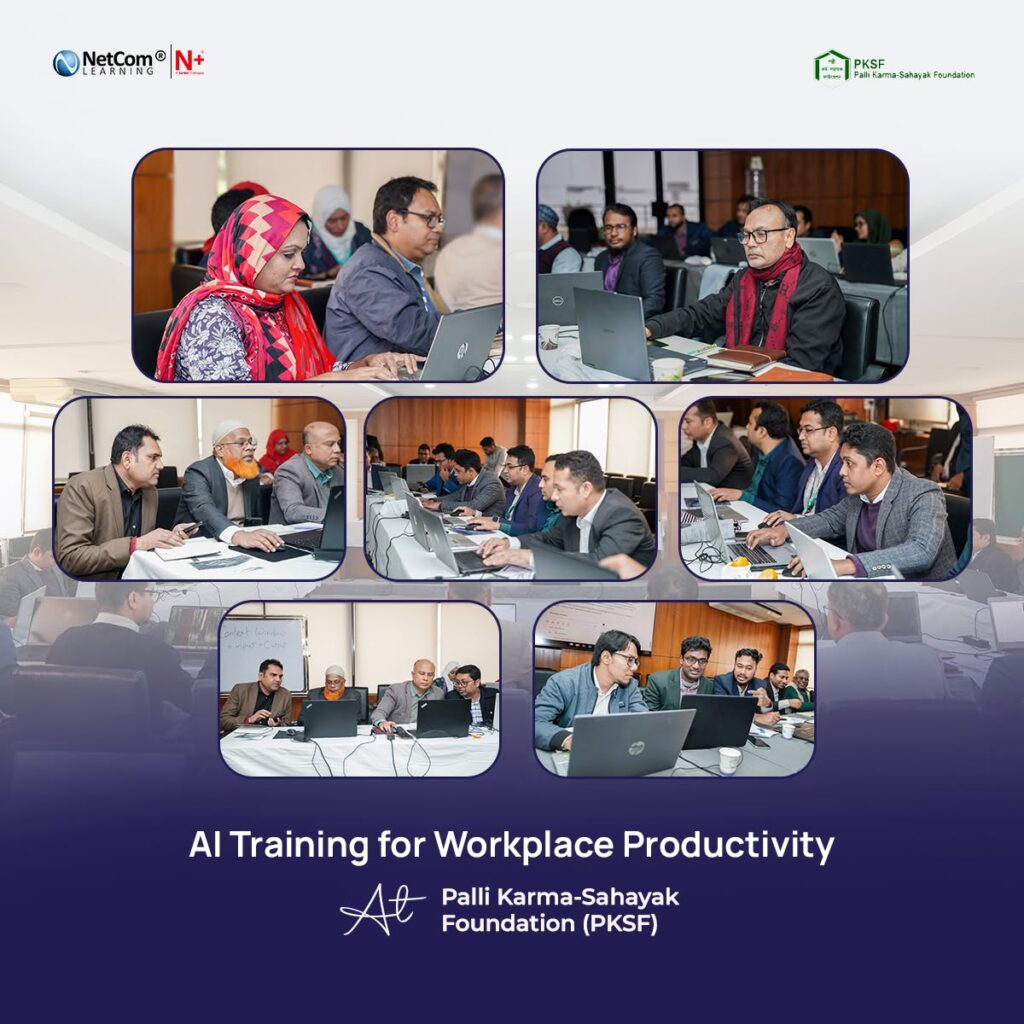
Here are a few glimpses from the two-day AI Training for Workplace Productivity program at the PKSF Auditorium.
Leave a Reply