

Educators have an important role in preparing students for a world increasingly influenced by artificial intelligence. When teachers understand both the capabilities and limitations of AI, they can guide students toward using technology thoughtfully, ethically, and effectively.
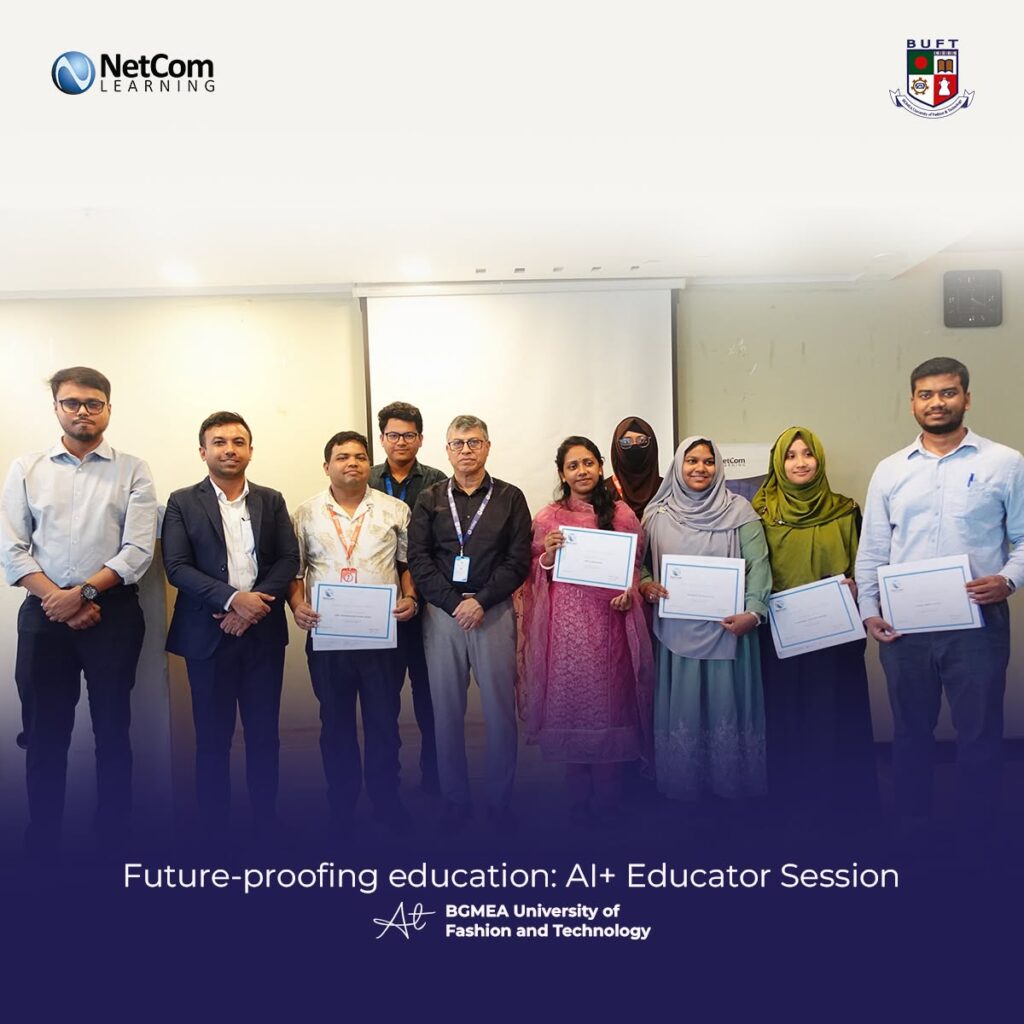
With this objective, BGMEA University of Fashion & Technology (BUFT) hosted an “AI+ Educator Session” for its faculty members on October 22, 2025. The session was facilitated by NetCom Learning Bangladesh to explore how artificial intelligence can support teaching, academic work, and educational administration.
BUFT serves the learning and research needs of Bangladesh’s apparel, fashion, textile, business, and technology sectors. Developing AI literacy among its educators can help connect subject expertise with the evolving skills students will encounter in higher education and professional environments.
MD Imdadul Islam, Head of Training & Solutions at NetCom Learning Bangladesh, led the session. Through practical examples and guided discussion, he introduced faculty members to ways AI-assisted tools can be incorporated into appropriate academic workflows.
The session explored potential applications of AI in lesson planning, preparing initial teaching materials, developing assessment ideas, summarizing permitted research content, adapting explanations for different learners, organizing information, and improving routine academic communication.
Participants also considered how generative AI could support educators in creating preliminary examples, discussion prompts, presentation outlines, and feedback frameworks. These applications may save preparation time, but every output must be reviewed for accuracy, relevance, inclusiveness, and alignment with the intended learning outcomes.
The discussion emphasized that AI should assist an educator’s professional judgment rather than replace it. Teachers remain responsible for deciding what students should learn, how their progress should be evaluated, and whether an AI-generated resource is appropriate for a particular subject or classroom.
Academic integrity was another central part of the conversation. Clear institutional guidance is necessary so students understand when AI use is permitted, how it should be disclosed, and why original thinking, proper referencing, and independent learning remain essential.
Protecting information is equally important. Student records, unpublished research, examination materials, internal documents, and other confidential content should only be processed through secure systems approved by the institution. Educators should also verify AI-generated facts and references before incorporating them into teaching or research.
Meaningful integration begins with a learning need, not with a tool. By defining clear educational objectives and maintaining human oversight, faculty members can evaluate where AI adds genuine value and where conventional teaching methods remain more suitable.
We appreciate BUFT for creating this professional learning opportunity and recognize Md. Rafiqul Islam, Business Development Executive at NetCom Learning Bangladesh, for supporting the coordination of the session.
The engagement reflected a shared commitment to an educational environment where innovation and integrity develop together. Building educators’ AI capabilities today can help students approach tomorrow’s technologies with stronger judgment, confidence, and responsibility.
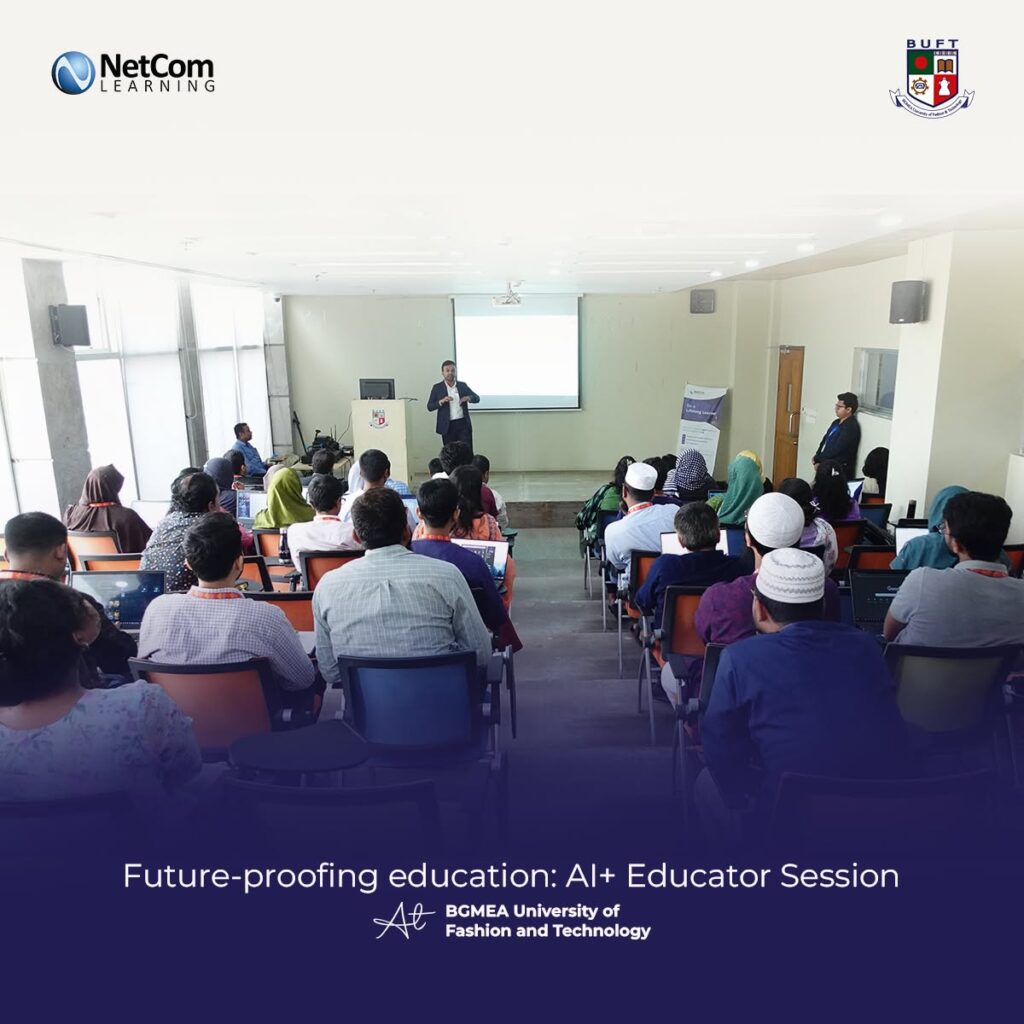
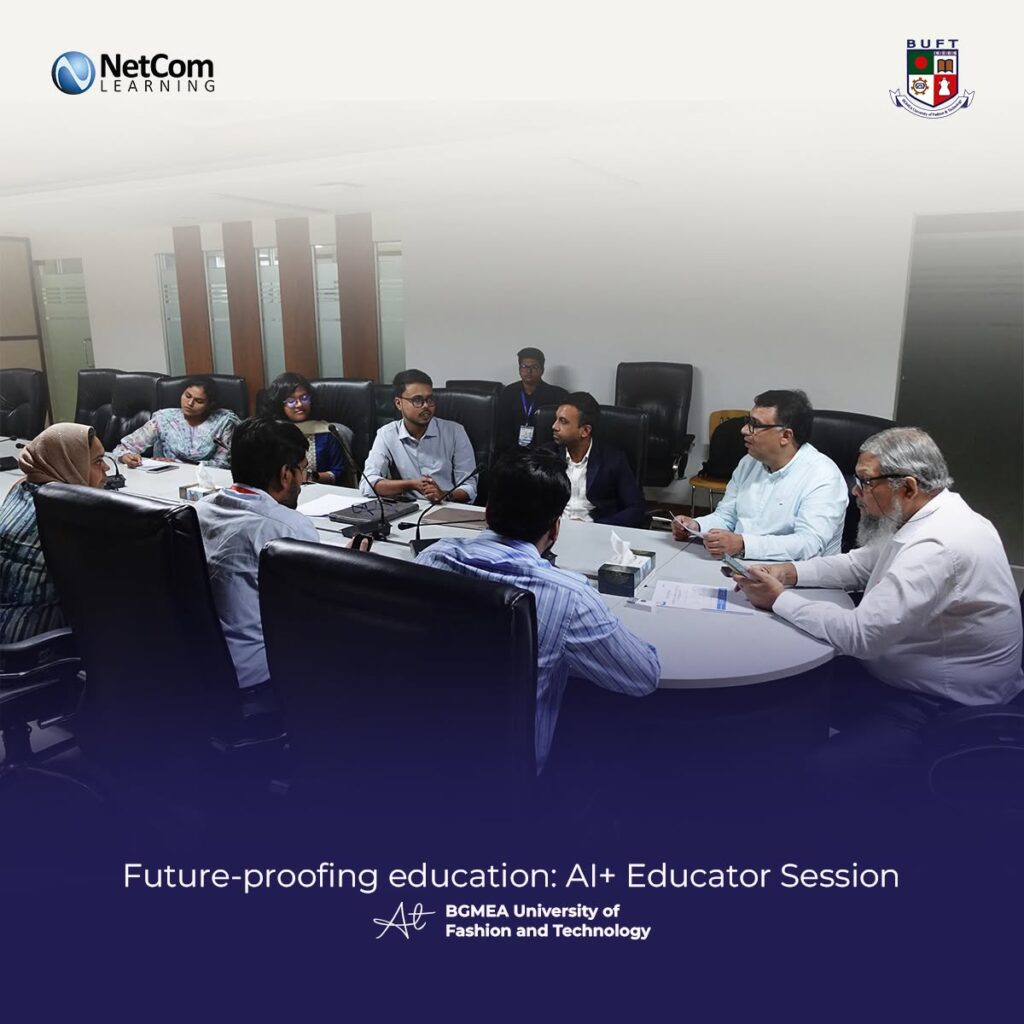
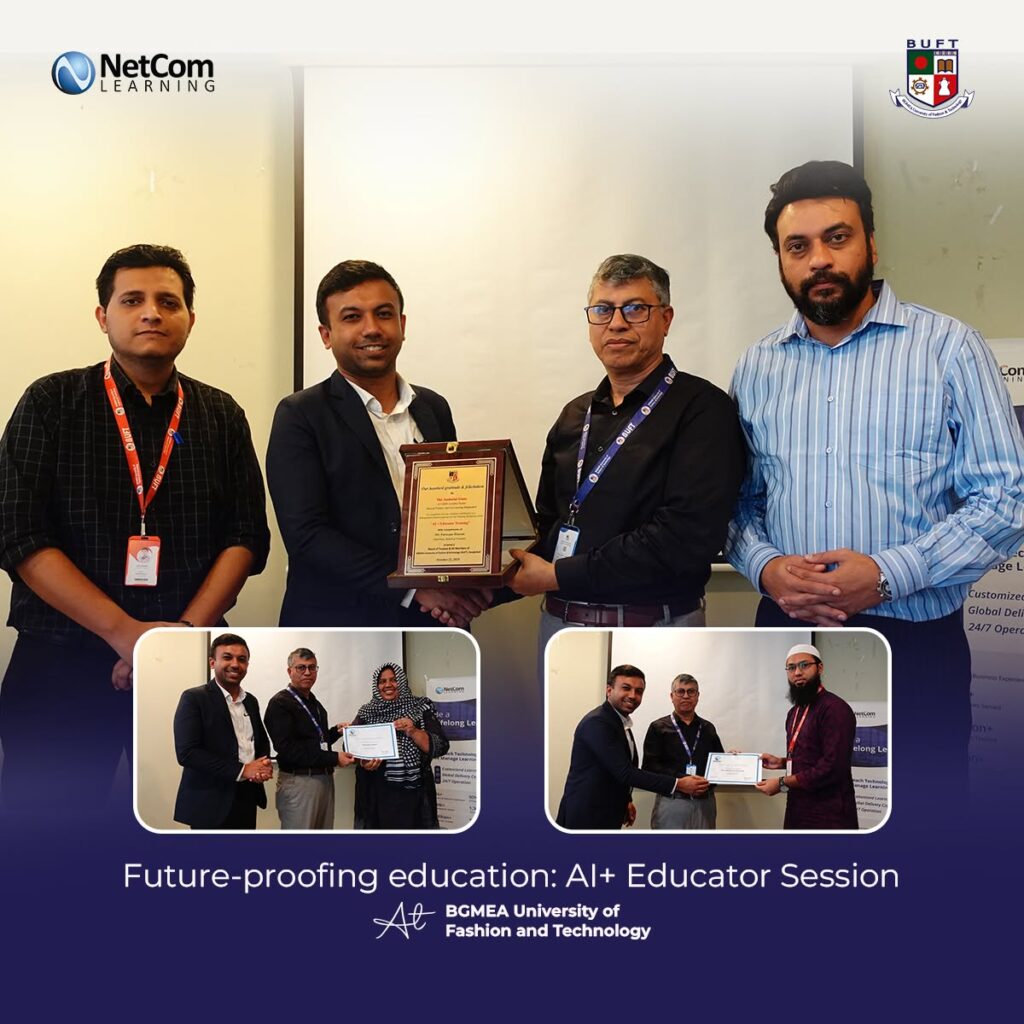
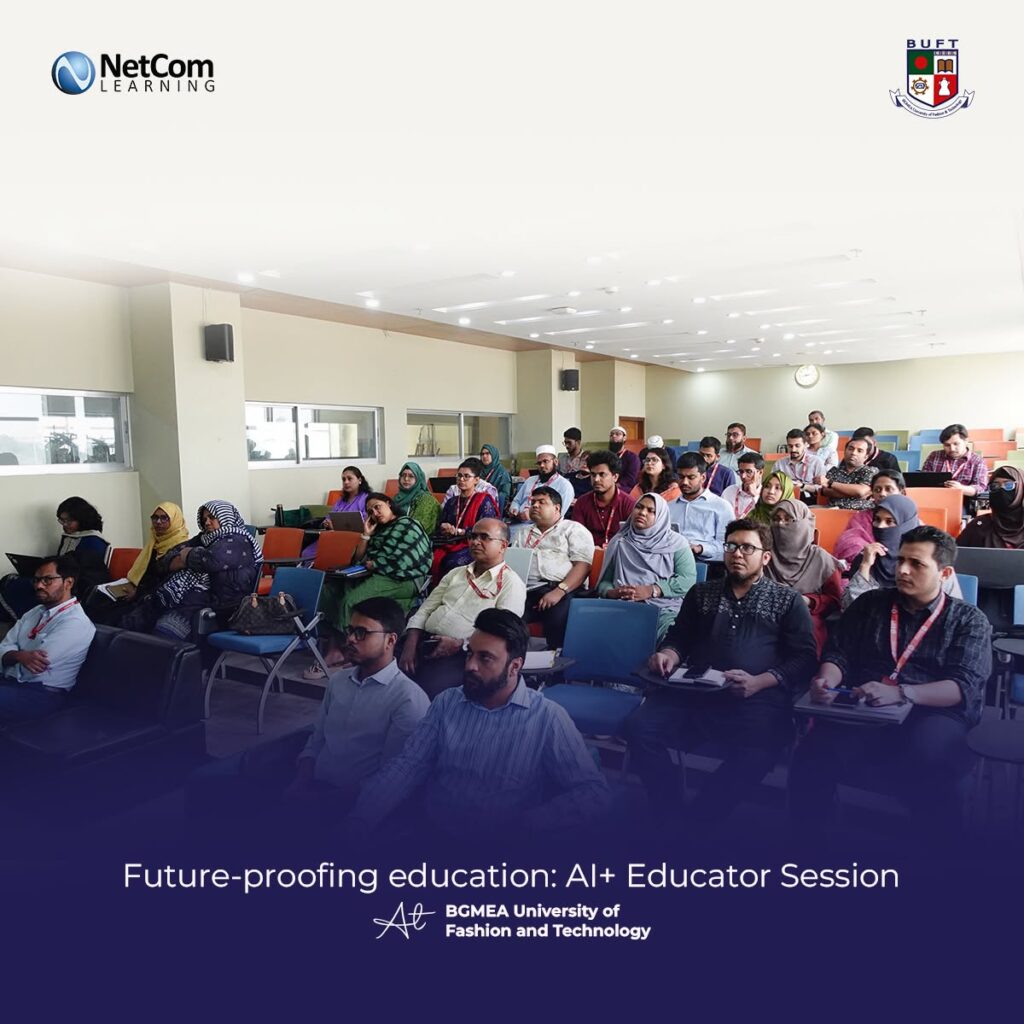
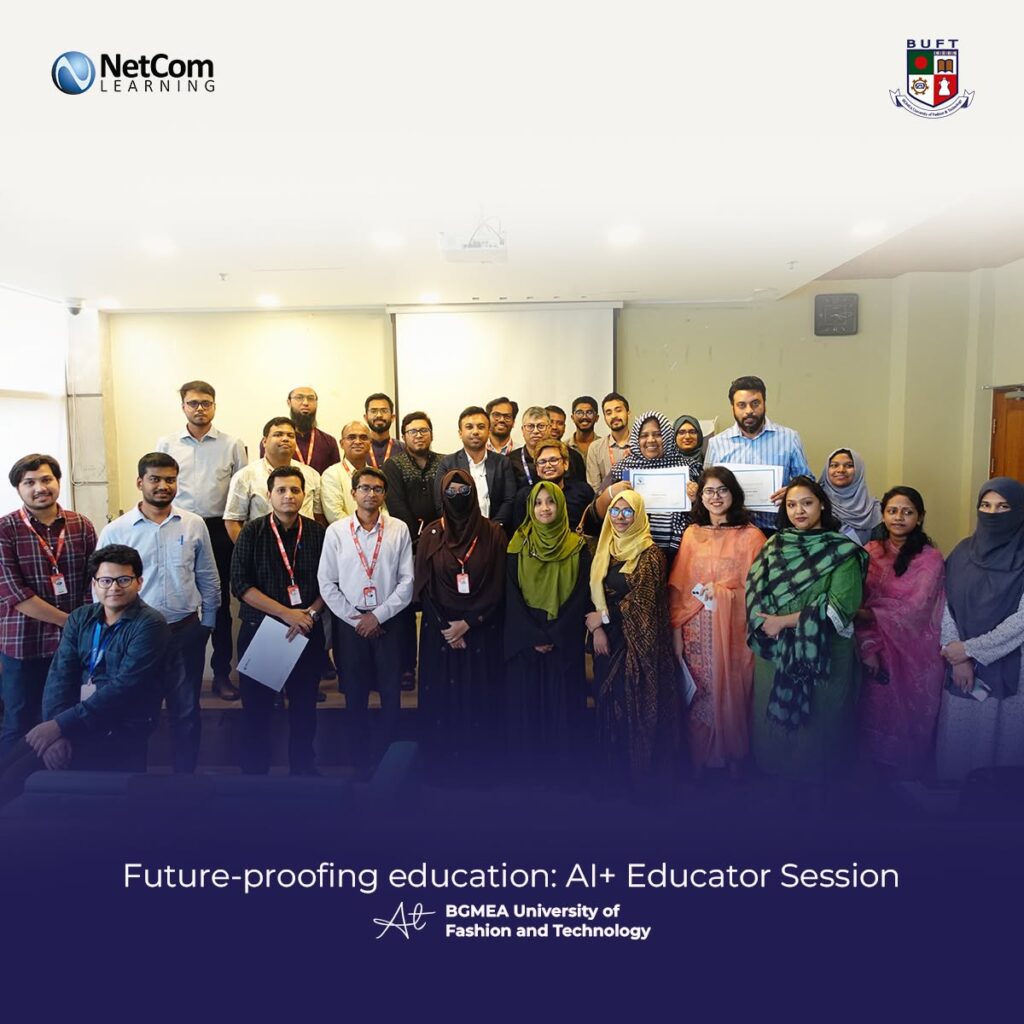
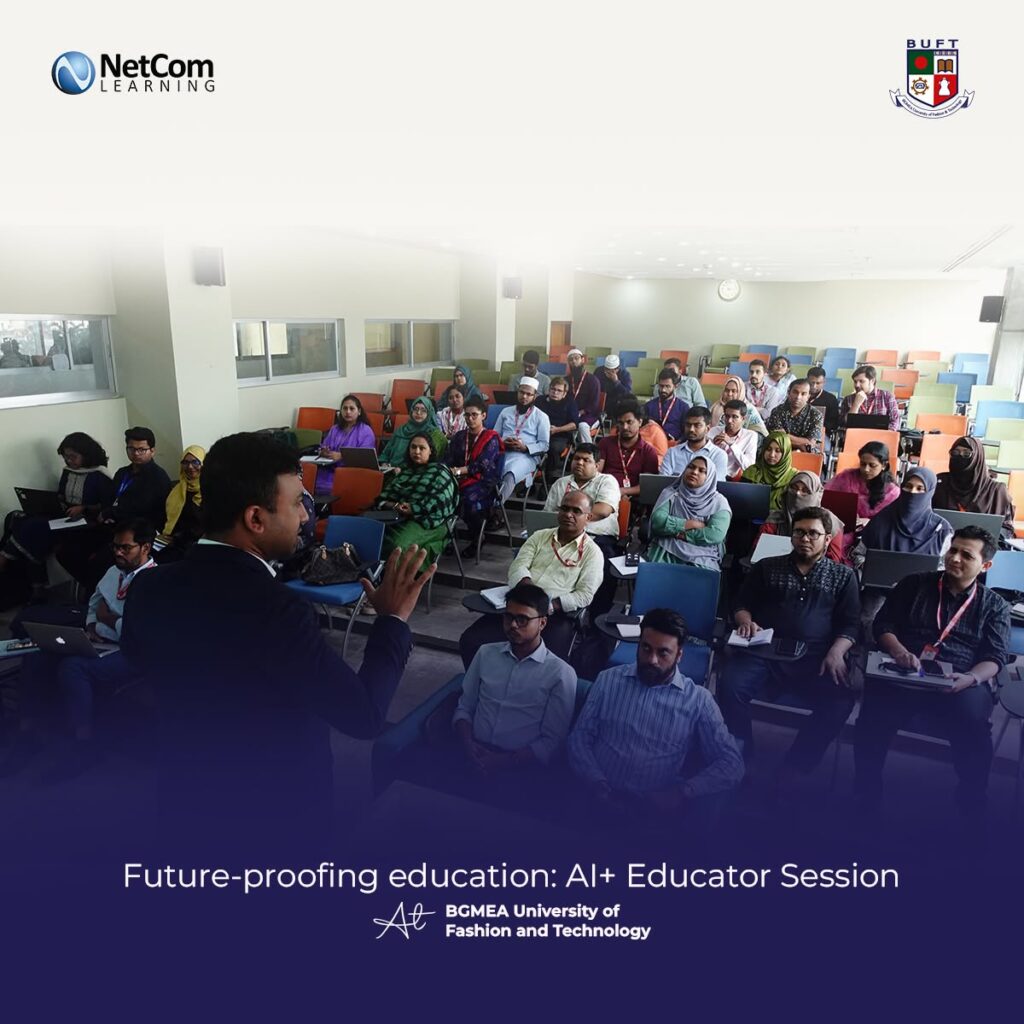
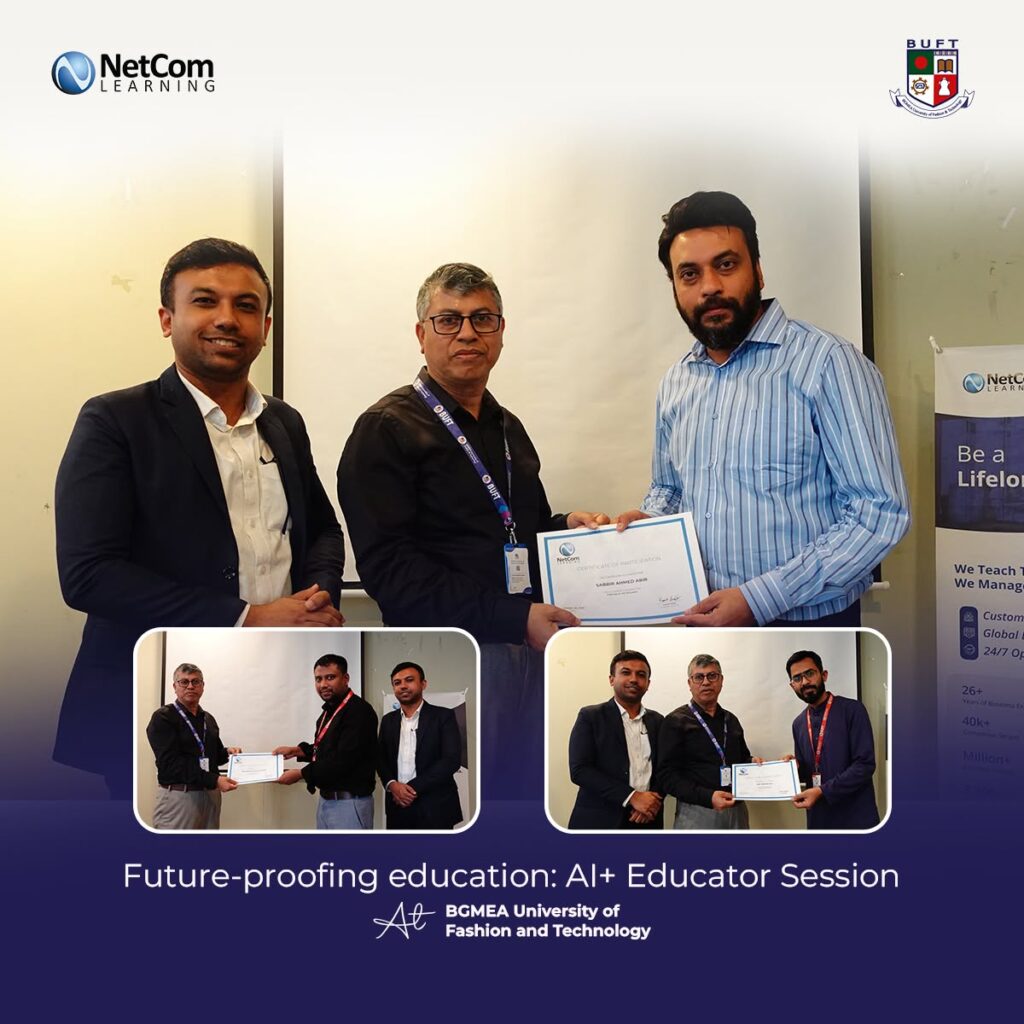
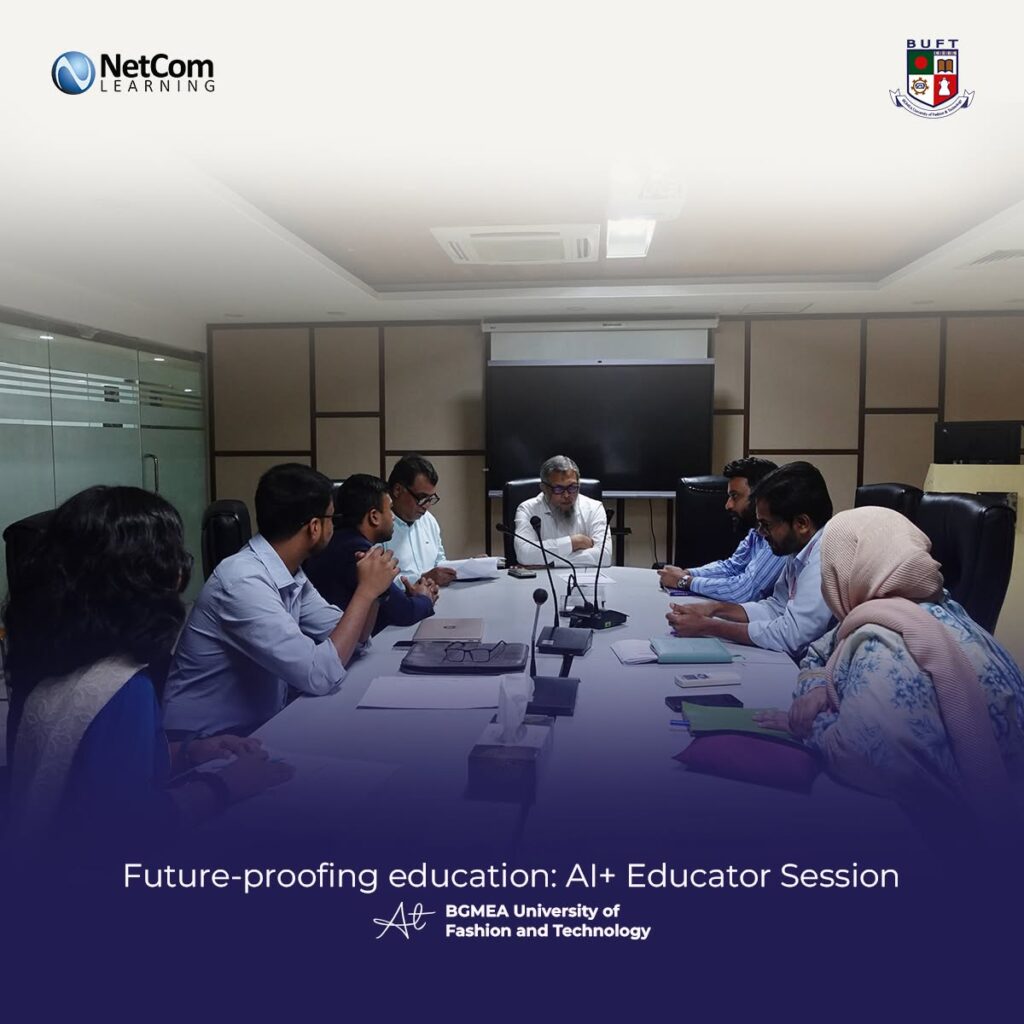
Here are a few glimpses from the AI+ Educator Session at BGMEA University of Fashion & Technology.
Leave a Reply