

Engineering consultancy depends on precision, multidisciplinary coordination, reliable documentation, and informed decision-making. Professionals often manage substantial volumes of technical information while balancing project requirements, stakeholder expectations, regulatory standards, and demanding timelines.
Artificial intelligence can support this work by assisting with routine documentation, information retrieval, data organization, preliminary analysis, and professional communication. When applied to clearly defined tasks, these capabilities can give engineering professionals more time to concentrate on complex design challenges, technical evaluation, and strategic planning.
To explore these opportunities, EQMS Consulting Limited hosted a specialized session on “AI for Engineering Consultancy Professionals,” facilitated by NetCom Learning Bangladesh. EQMS is a multidisciplinary consultancy firm providing engineering, project management, sustainability, environmental, and related professional services across diverse sectors.
The session examined how engineering consultancy professionals can approach AI as a practical workplace assistant. Potential use cases included organizing project information, summarizing lengthy documents, preparing initial report structures, refining technical communication, and accelerating research across approved sources.
Fahmidul Alam, Mentor at NetCom Learning Bangladesh and AI CERTs® Certified Trainer, led the session. Through practical discussion, he guided participants on selecting appropriate AI applications, developing clear instructions, and evaluating generated responses before incorporating them into professional workflows.
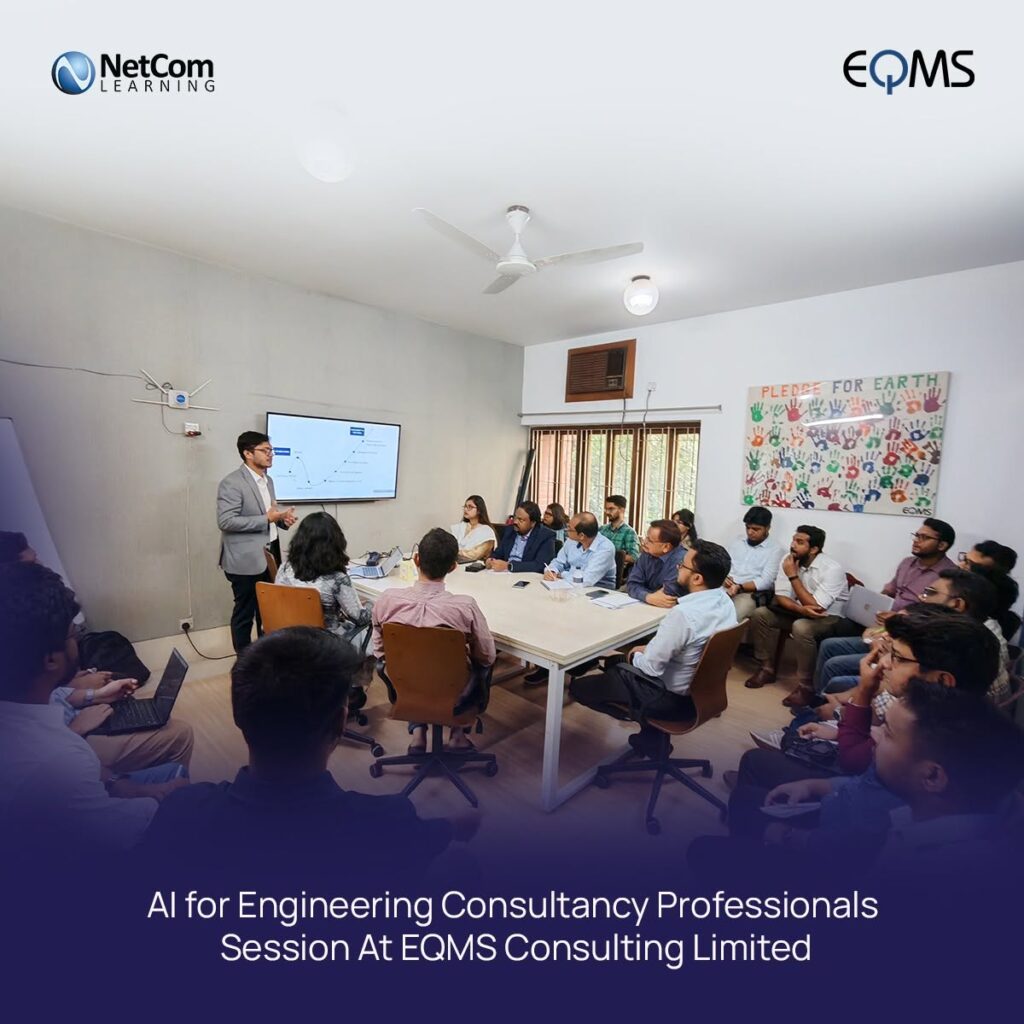
A central message of the session was that effective AI adoption begins with a specific business need. Rather than applying automation indiscriminately, organizations should first identify repetitive or information-intensive tasks, understand the existing process, and determine how improvement will be measured.
Human oversight remains essential in engineering consultancy. AI-generated calculations, summaries, interpretations, and recommendations should be independently reviewed by qualified professionals. Technical standards, contractual obligations, site conditions, engineering judgment, and regulatory requirements must continue to guide every consequential decision.
Data protection is equally important. Project drawings, client records, tender documents, commercial information, environmental data, and other confidential materials should only be processed through systems approved by the organization. Clear governance can help teams benefit from AI while protecting professional accountability and client trust.
The session provided a foundation for understanding how AI can complement engineering expertise without replacing professional judgment. Building this combination of technical knowledge, responsible experimentation, and digital fluency can help consultancy teams work with greater consistency and efficiency.
We appreciate the collaboration with EQMS Consulting Limited and recognize the contribution of Md. Rafiqul Islam, Business Development Executive, in coordinating this learning initiative and supporting NetCom Learning Bangladesh’s commitment to lifelong professional development.
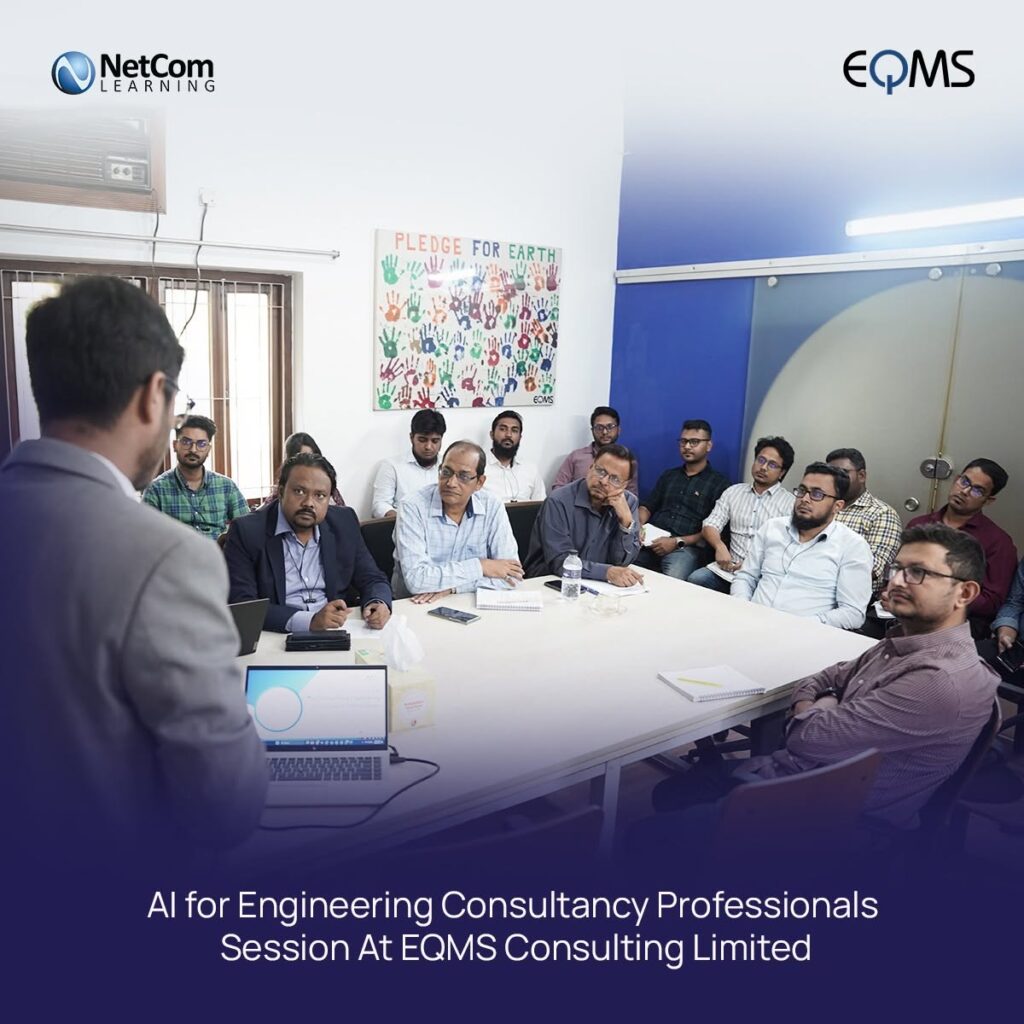
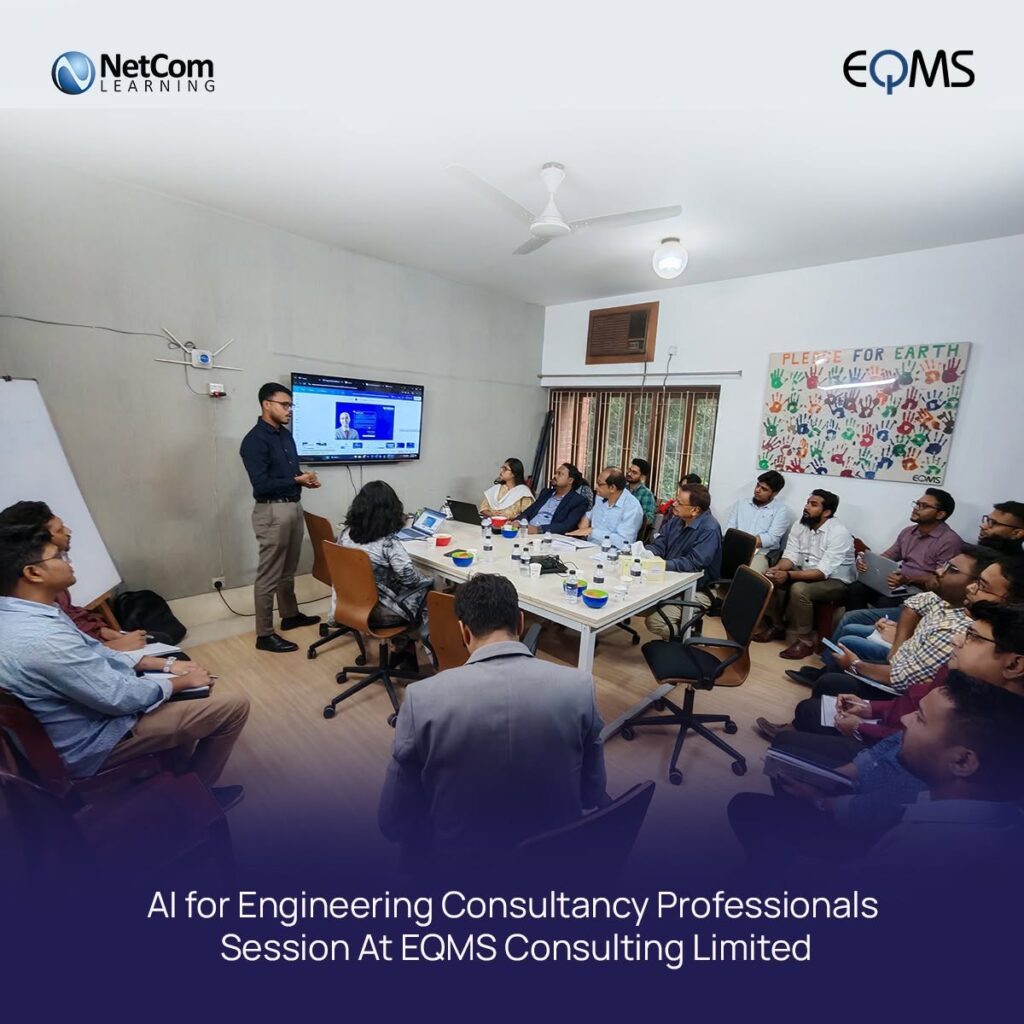
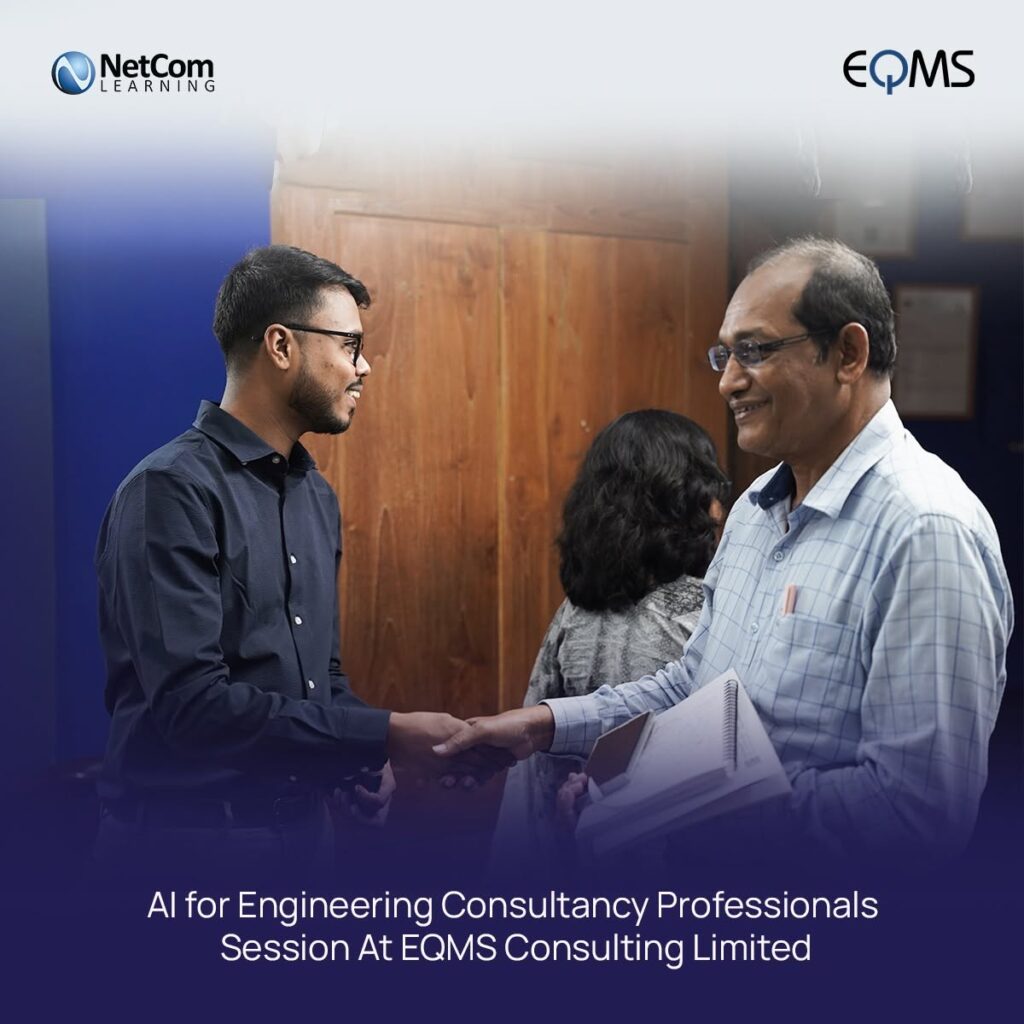
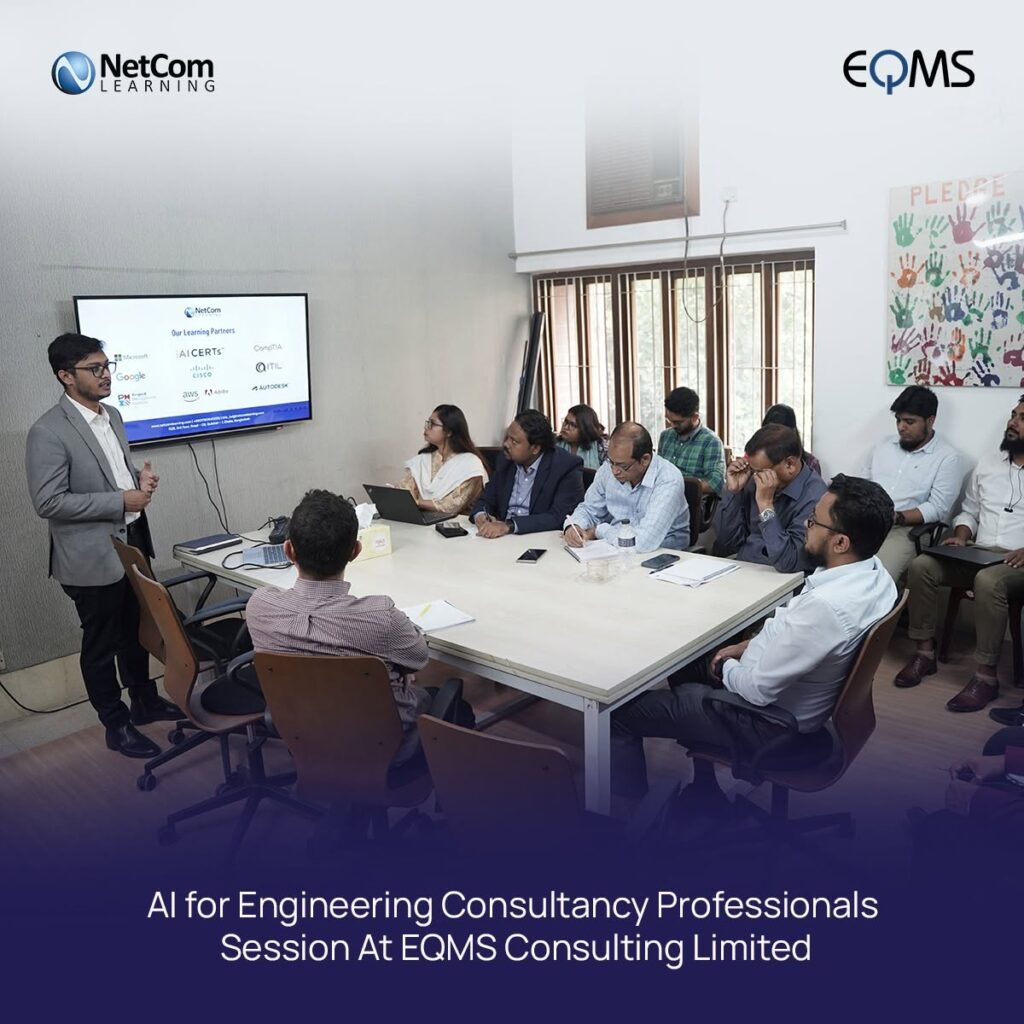
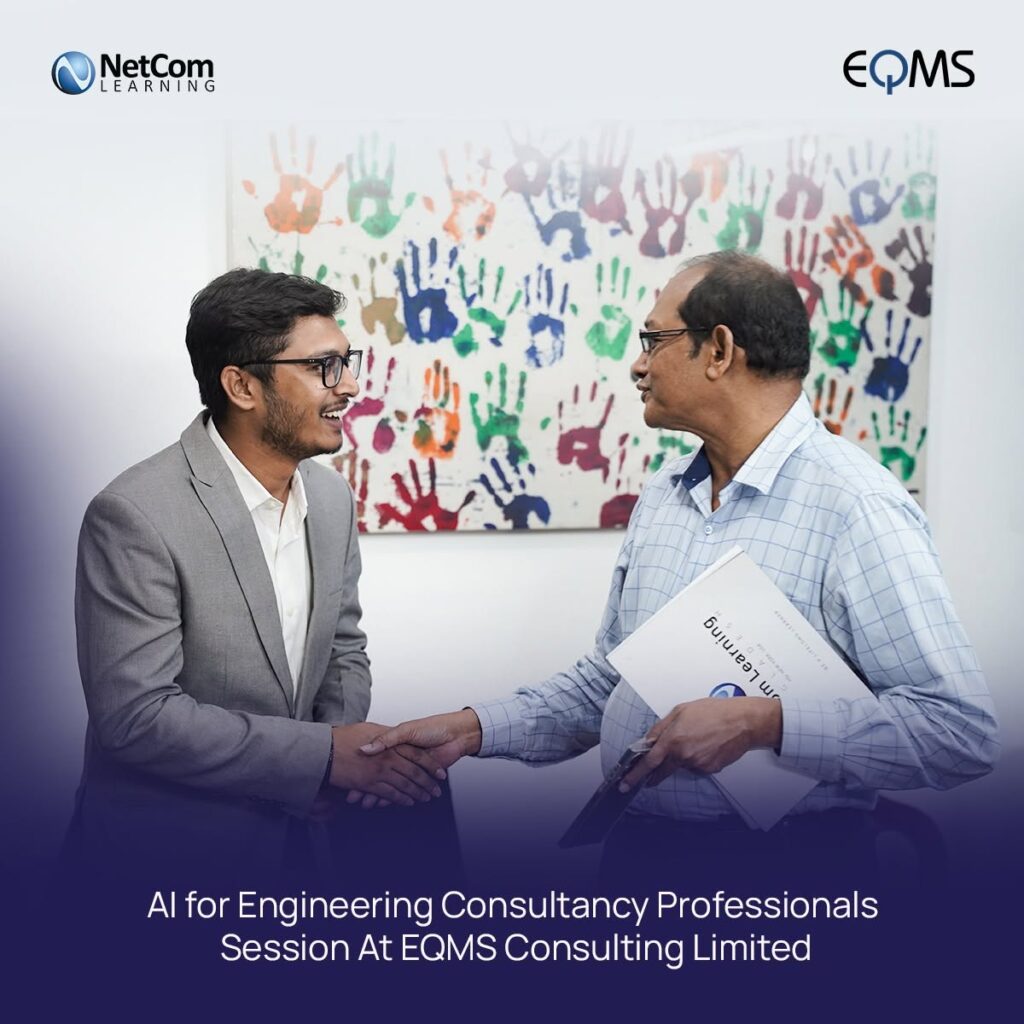
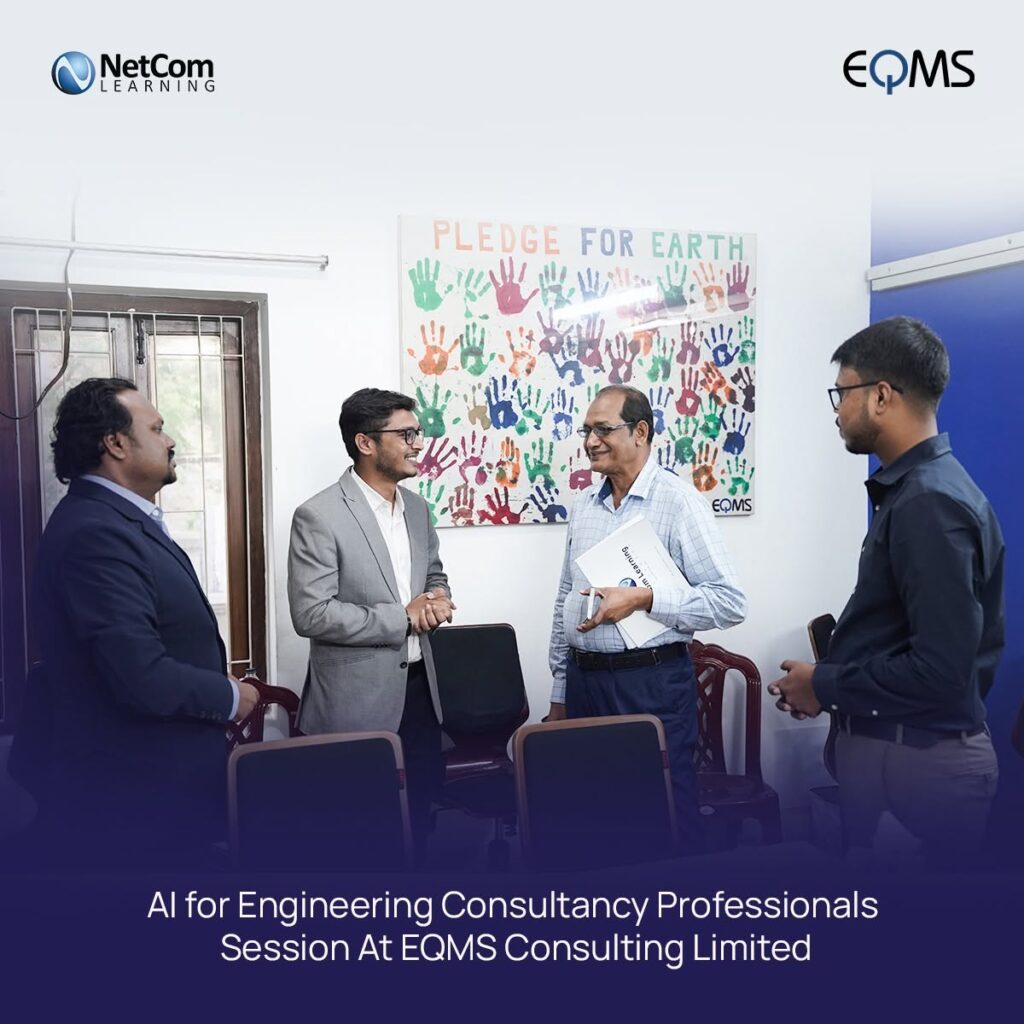
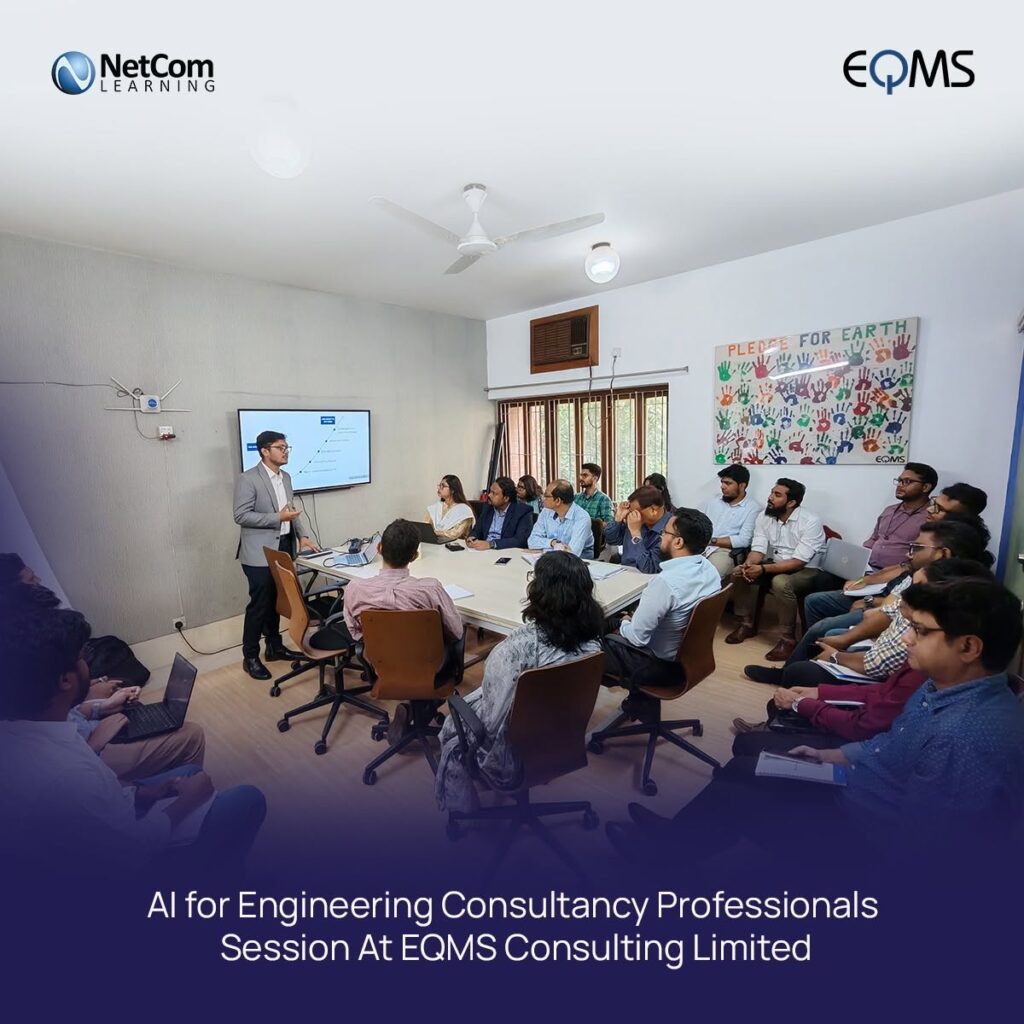
Here are a few glimpses from the AI for Engineering Consultancy Professionals session at EQMS Consulting Limited.
Leave a Reply