
Pharmaceutical organizations manage extensive scientific, technical, regulatory, manufacturing, and operational information. Working with this material efficiently requires more than access to artificial intelligence—it requires the ability to provide clear instructions, supply reliable context, define appropriate constraints, and evaluate every generated response carefully.
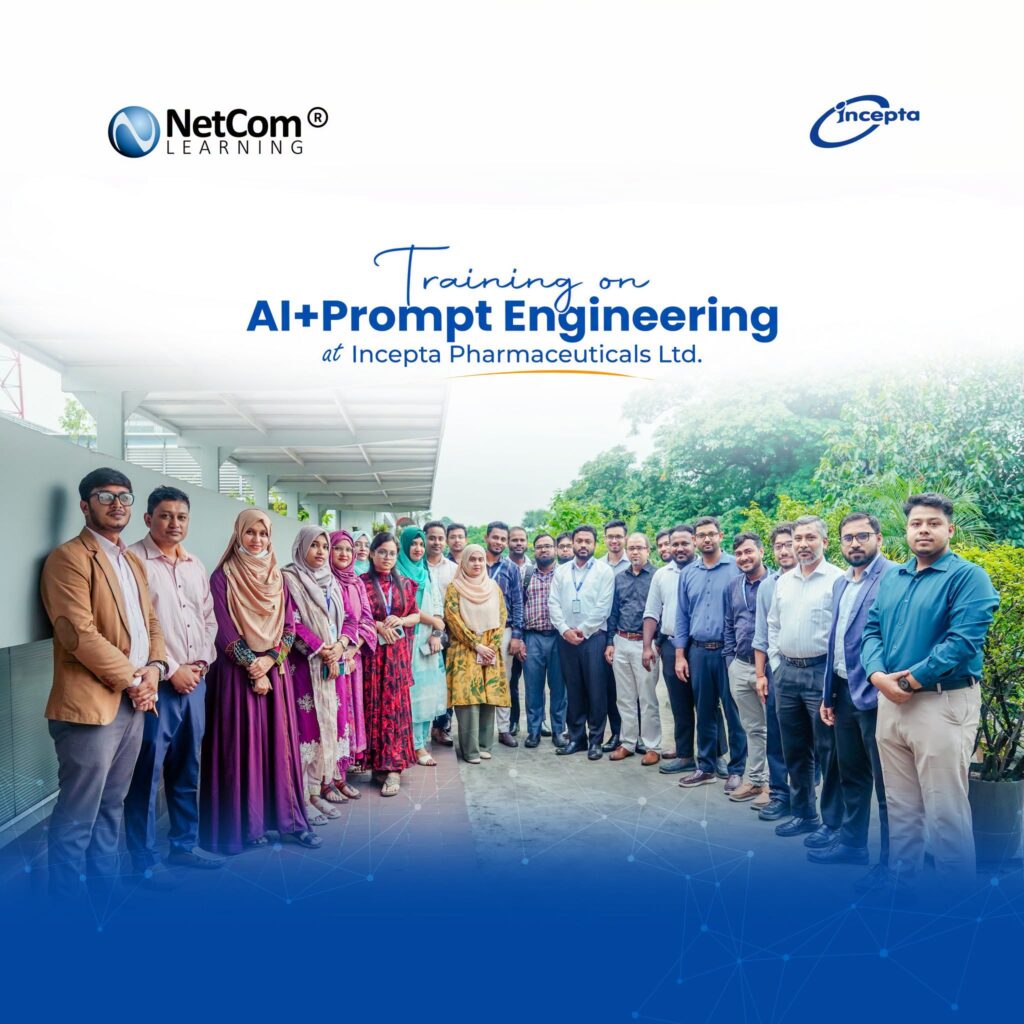
To develop these capabilities, Incepta Pharmaceuticals Ltd. partnered with NetCom Learning Bangladesh for an exclusive training program on “AI+ Prompt Engineering.”
Incepta operates across pharmaceutical manufacturing, research and development, specialized dosage forms, vaccines, distribution, and international markets. Within such a complex environment, prompt engineering can help professionals use generative AI more purposefully across suitable knowledge-based and administrative tasks.
The training explored how prompt structure influences the relevance, consistency, and usefulness of an AI-generated response. Participants examined how clearly defining a task, audience, context, source boundaries, expected format, and review criteria can produce more controlled outputs than relying on vague instructions.
Research summarization was one of the potential applications discussed. AI can assist professionals in organizing information from approved sources, extracting key themes, and preparing preliminary summaries. However, it cannot replace a systematic literature review, validated databases, subject-matter expertise, or professional assessment of scientific evidence.
The session also considered technical documentation and routine administrative workflows. Generative AI may support initial drafting, formatting, meeting summaries, information classification, and recurring correspondence when employees use approved data and follow established review procedures.
Prompt engineering is particularly valuable when it is integrated into a clearly understood workflow. Before using AI, teams should define the objective, identify acceptable information sources, establish the required output standard, and determine who is responsible for validation.
In a pharmaceutical environment, every AI-generated scientific or technical statement must remain subject to qualified human review. References, calculations, claims, interpretations, and recommendations should be checked for accuracy, completeness, and alignment with applicable organizational and regulatory requirements.
Confidentiality is equally critical. Formulation data, research records, clinical information, manufacturing documentation, intellectual property, employee information, and regulatory materials should only be processed through secure systems explicitly approved by the organization.
The training provided Incepta professionals with a structured foundation for communicating more effectively with generative AI. Combining precise prompting with scientific judgment, responsible governance, and rigorous validation can help teams improve suitable workflows without compromising quality or accountability.
We appreciate the collaboration with Incepta Pharmaceuticals Ltd. and the active engagement of its professionals throughout the program. Their commitment to continuous capability development reflects the growing importance of responsible AI literacy within Bangladesh’s pharmaceutical industry.
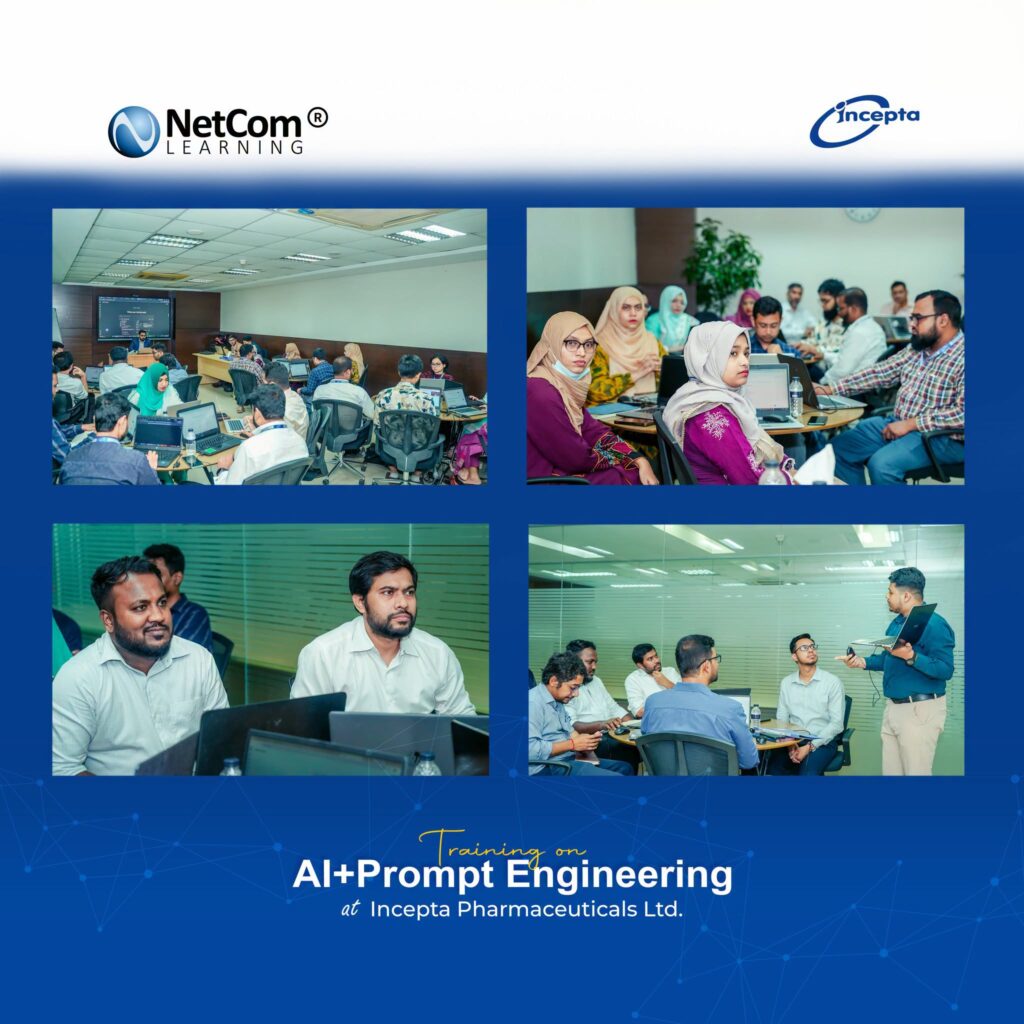
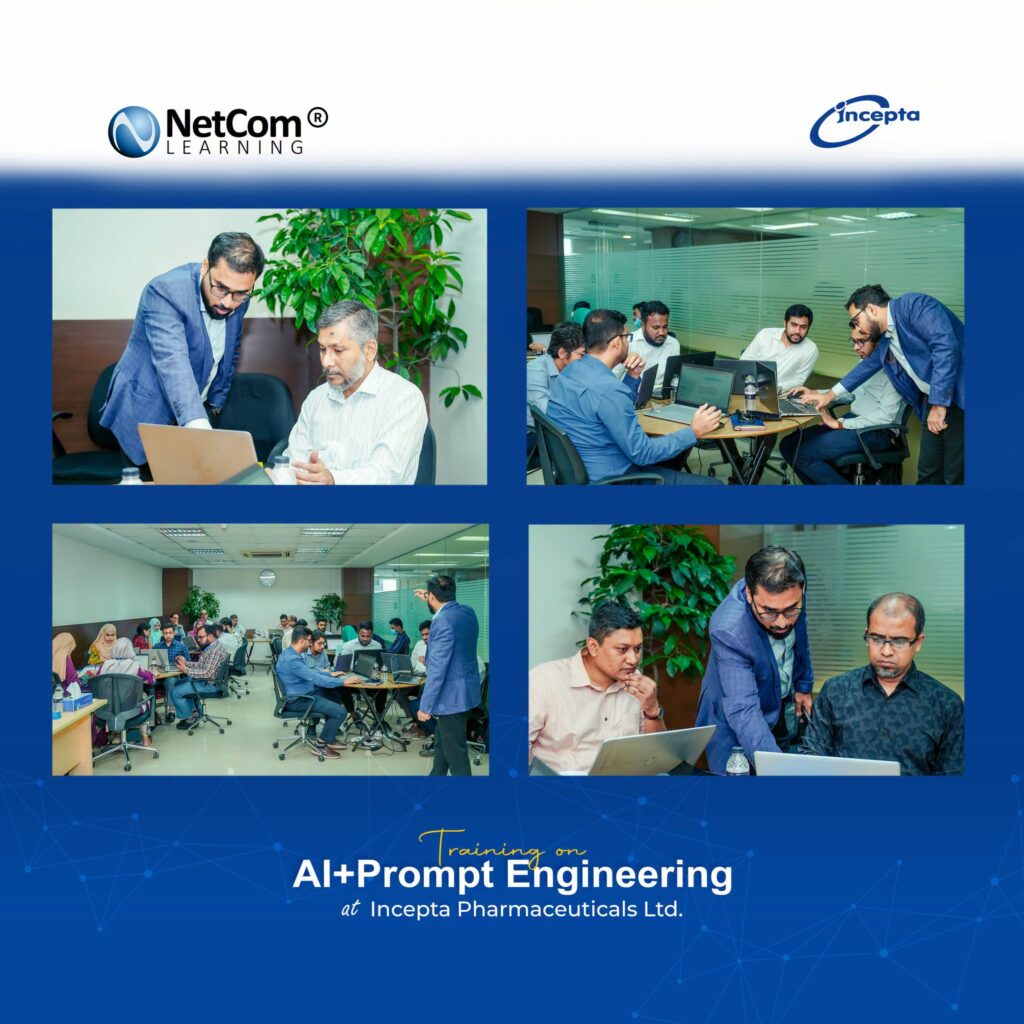
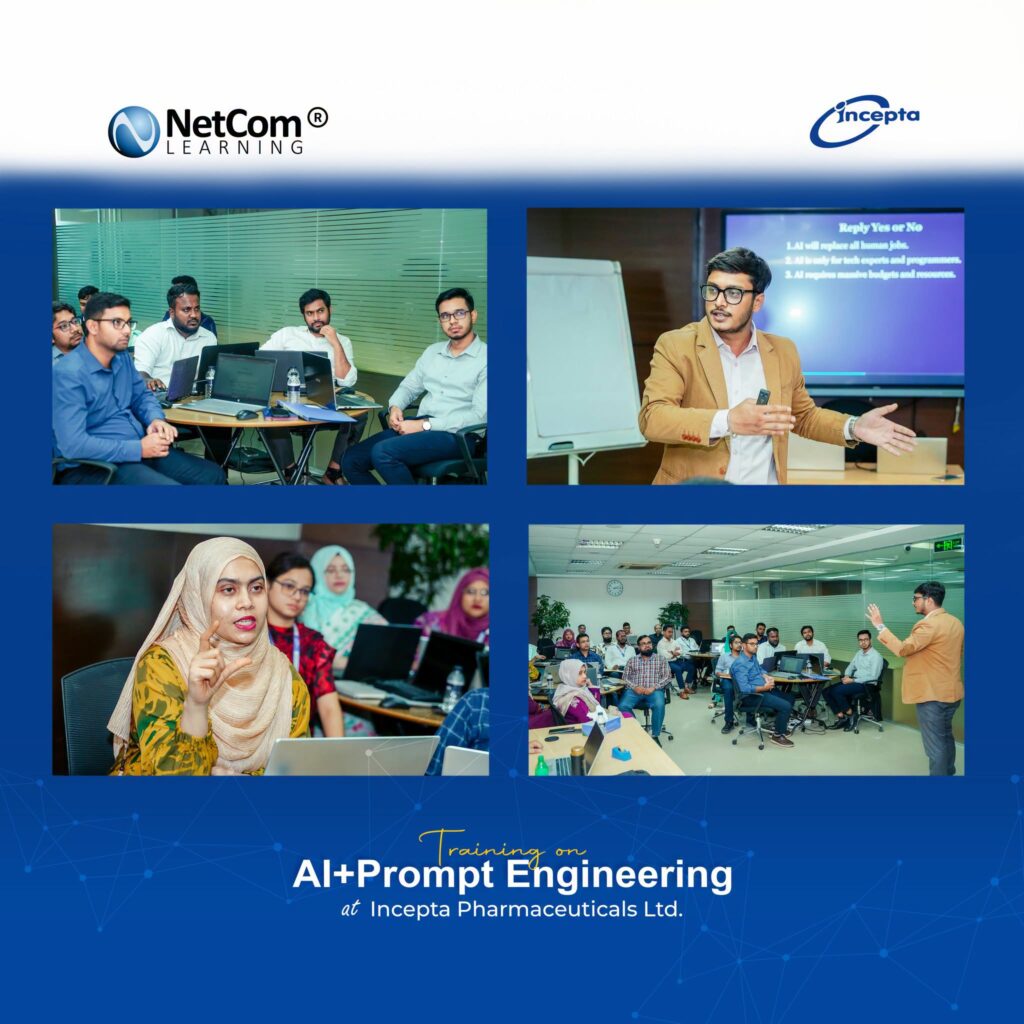
Here are a few glimpses from the AI+ Prompt Engineering training at Incepta Pharmaceuticals Ltd.
Leave a Reply