

The future of work is no longer about choosing between people and technology. It is about designing workplaces where human judgment, artificial intelligence, and AI agents can work together in ways that are productive, responsible, and genuinely useful.
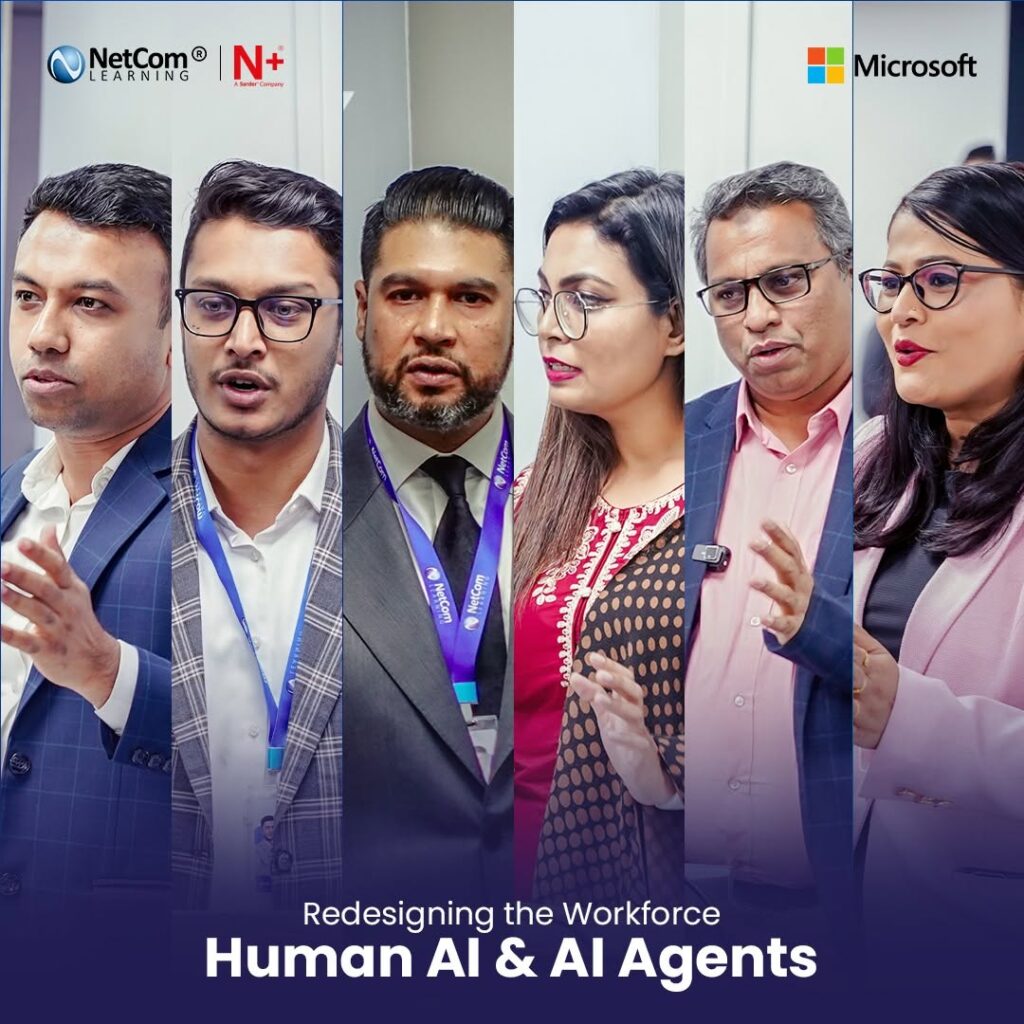
This important conversation brought together CHROs, HR Heads, and Talent Leaders from leading organizations across Bangladesh for a special session titled “Redesigning the Workforce: Human, AI and AI Agents.” Hosted at the Microsoft Bangladesh office, the event welcomed senior professionals in person while many others joined online.
The discussion explored how AI is changing the nature of work. While generative AI can assist with research, communication, analysis, and content development, AI agents may go further by coordinating multiple steps, interacting with connected systems, and completing defined tasks with varying levels of autonomy.
This shift creates opportunities to reduce repetitive work and make organizational processes more responsive. It also raises important questions: Which tasks are suitable for automation? Where must human judgment remain central? How should organizations manage accountability when an AI agent takes action? And how can employees be prepared for roles that are changing around them?
For HR and talent leaders, the challenge is not simply to introduce new technology. It is to redesign roles, identify emerging skill requirements, support workforce reskilling, and ensure that people understand how to collaborate effectively with AI.
The conversation also addressed the risks associated with automation. AI systems can generate incorrect information, inherit bias, operate with excessive permissions, or take actions without understanding their wider consequences. Clear governance, restricted access, monitoring, escalation procedures, and accountable human ownership must therefore remain part of every implementation.
Ethics and employee trust are equally important. People should understand when AI is being used, what workplace data it can access, and who remains responsible for decisions involving recruitment, performance, development, compensation, or employment. Automation should strengthen human capability—not make consequential workplace decisions less transparent.
For NetCom Learning Bangladesh, the session was an opportunity to contribute to a timely leadership conversation. Building an AI-ready workforce requires more than teaching employees how to use tools. It requires technical understanding, adaptable leadership, responsible governance, and a culture where continuous learning becomes part of everyday work.
The future of work will not be determined by automation alone. It will be shaped by the choices organizations make about where AI belongs, where it should stop, and how it can help people perform more meaningful work.
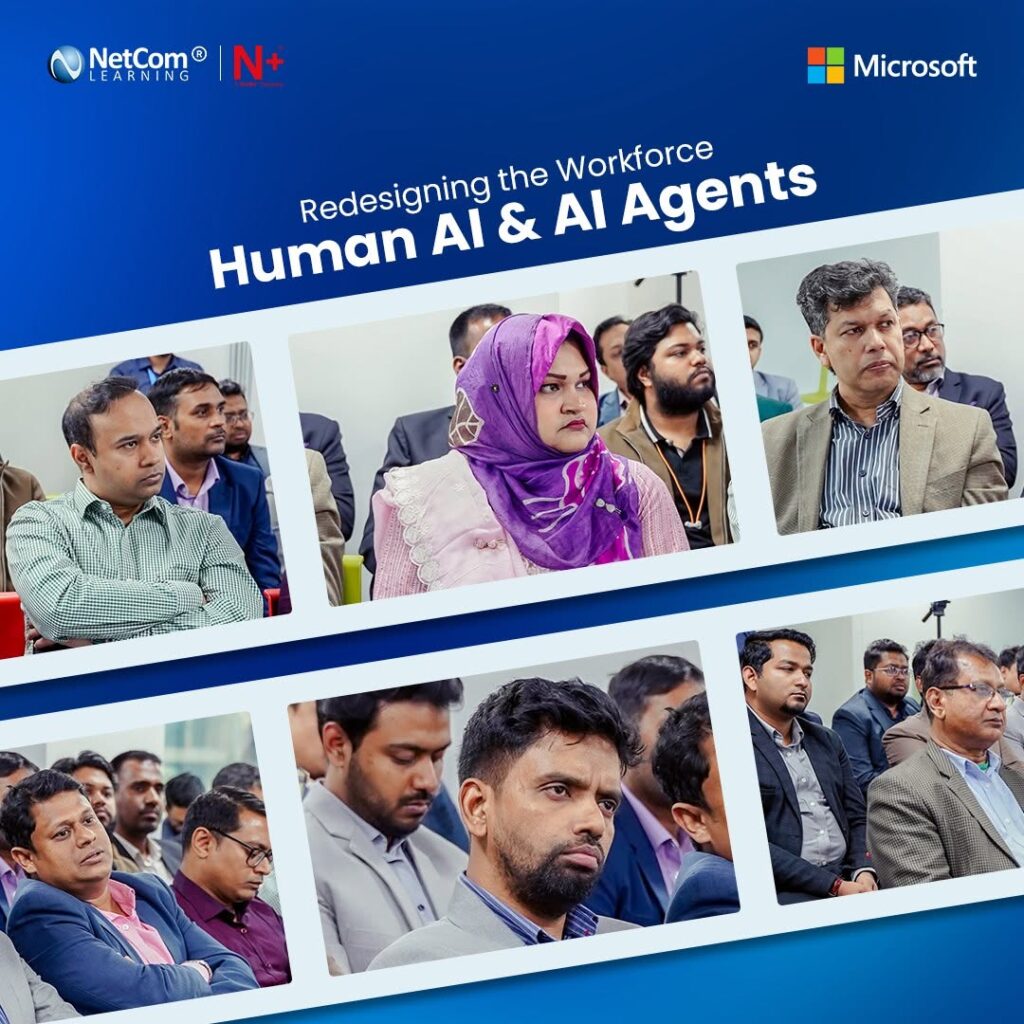
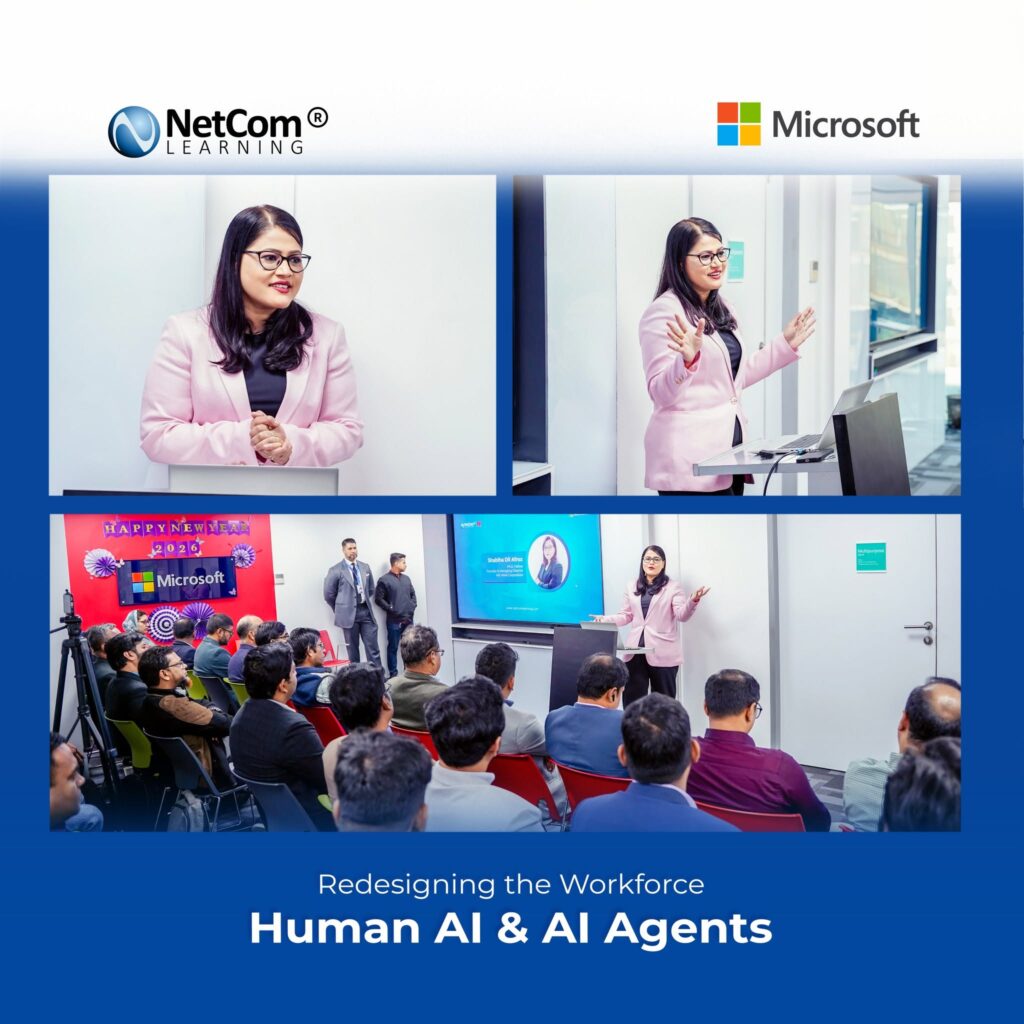
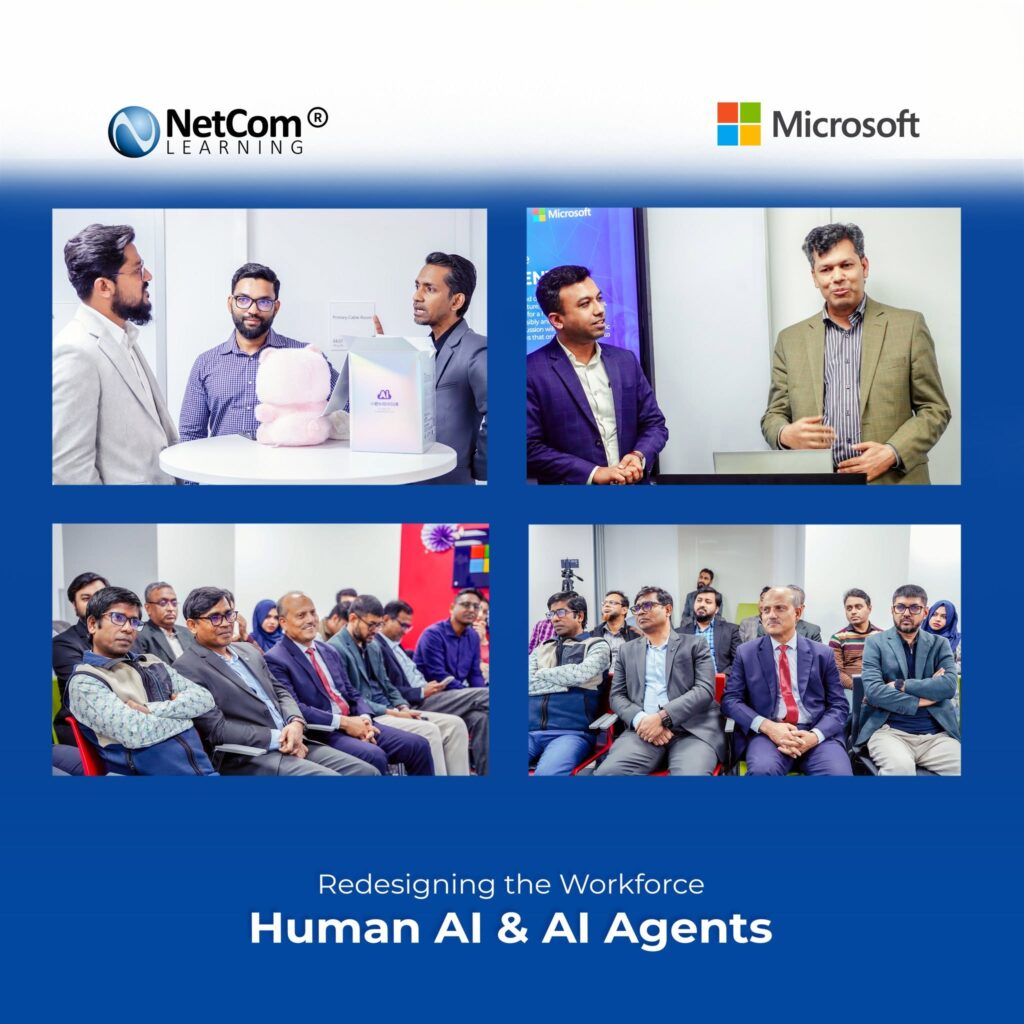
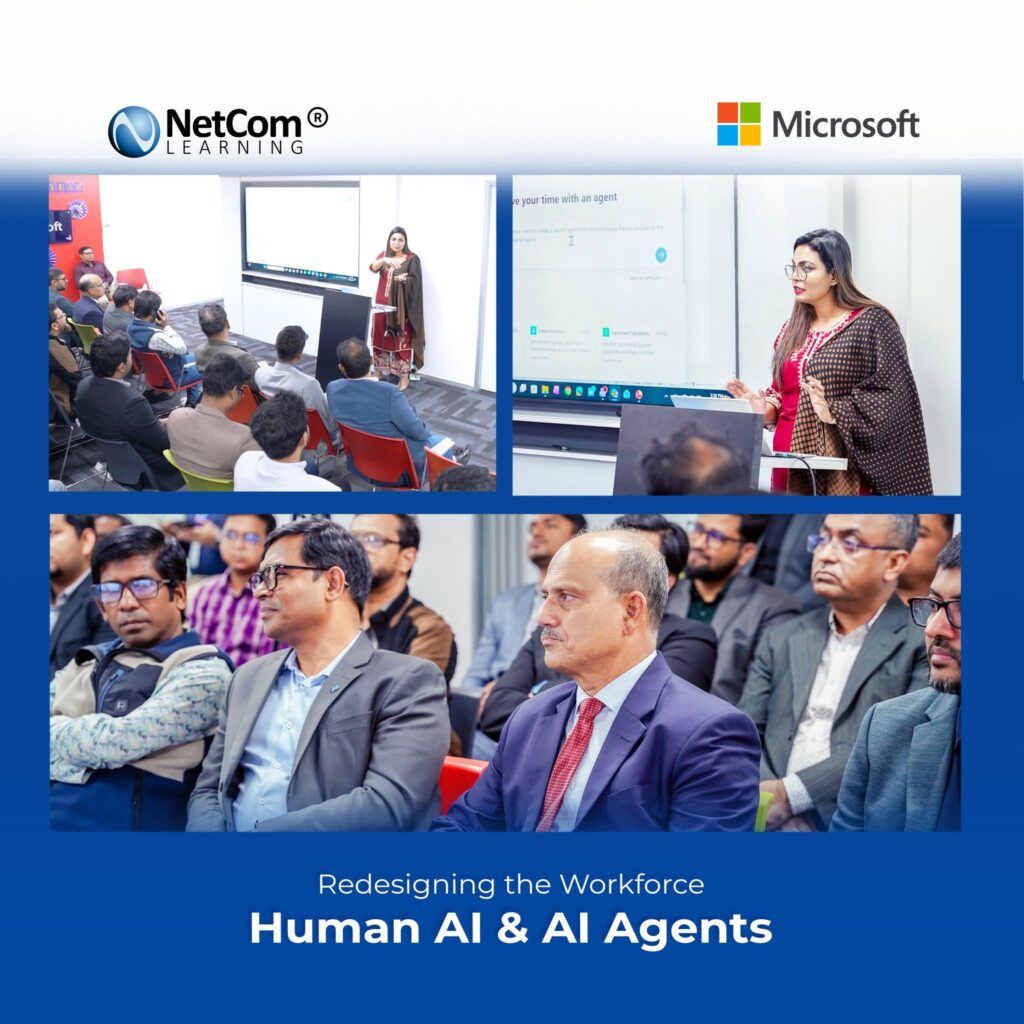
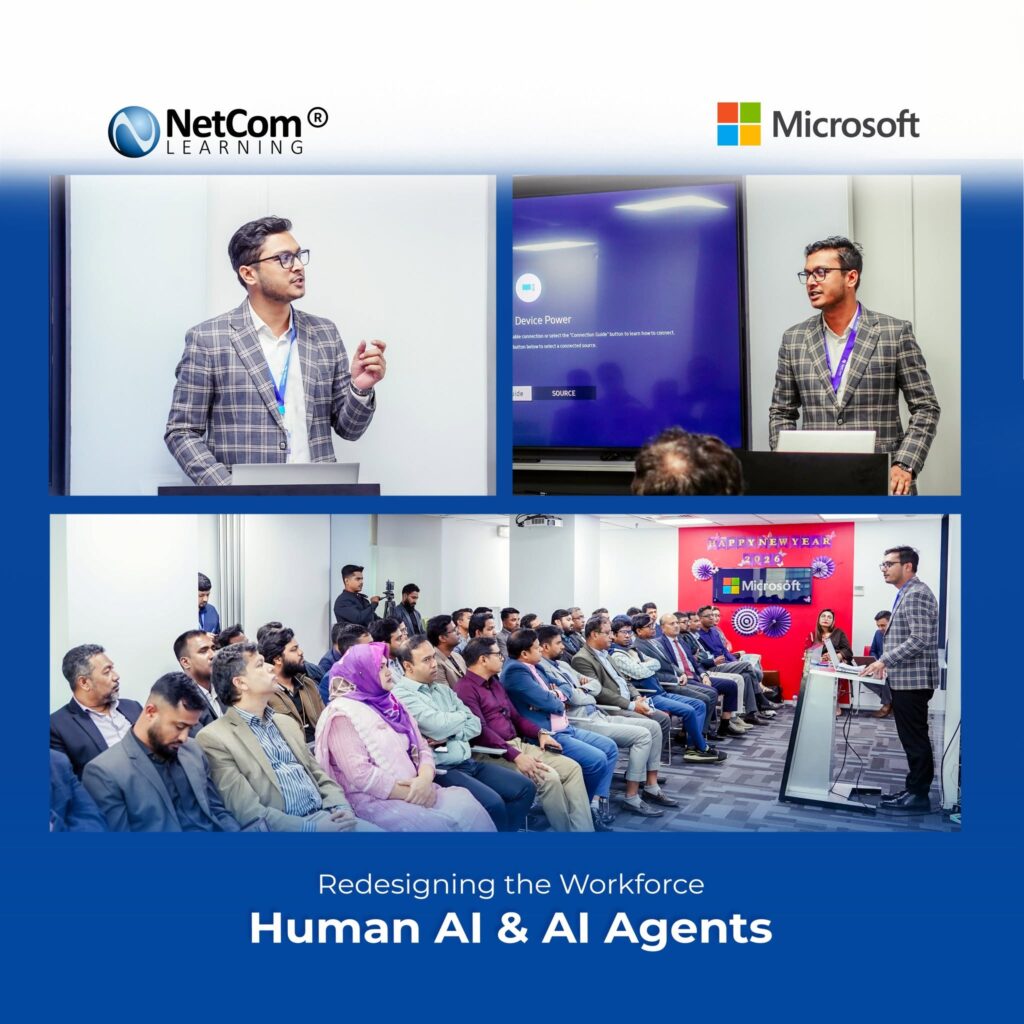
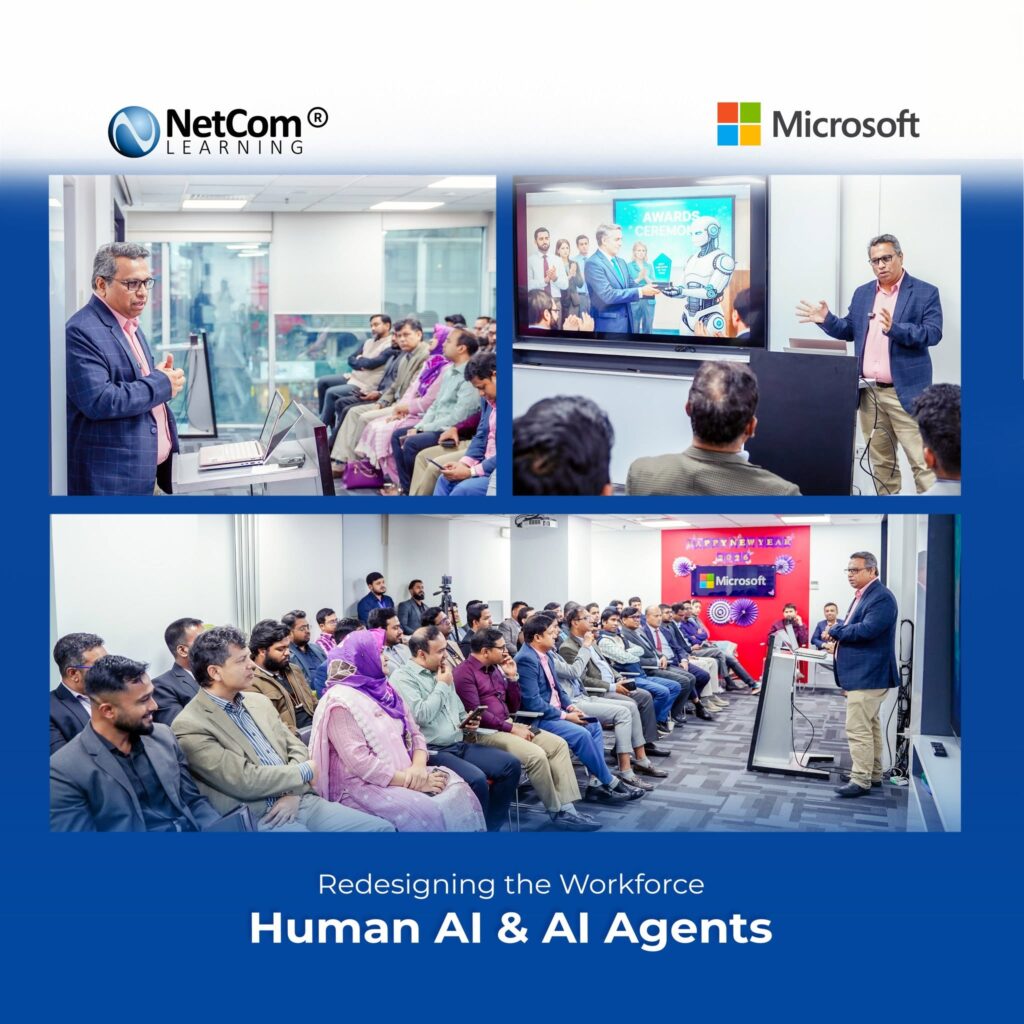
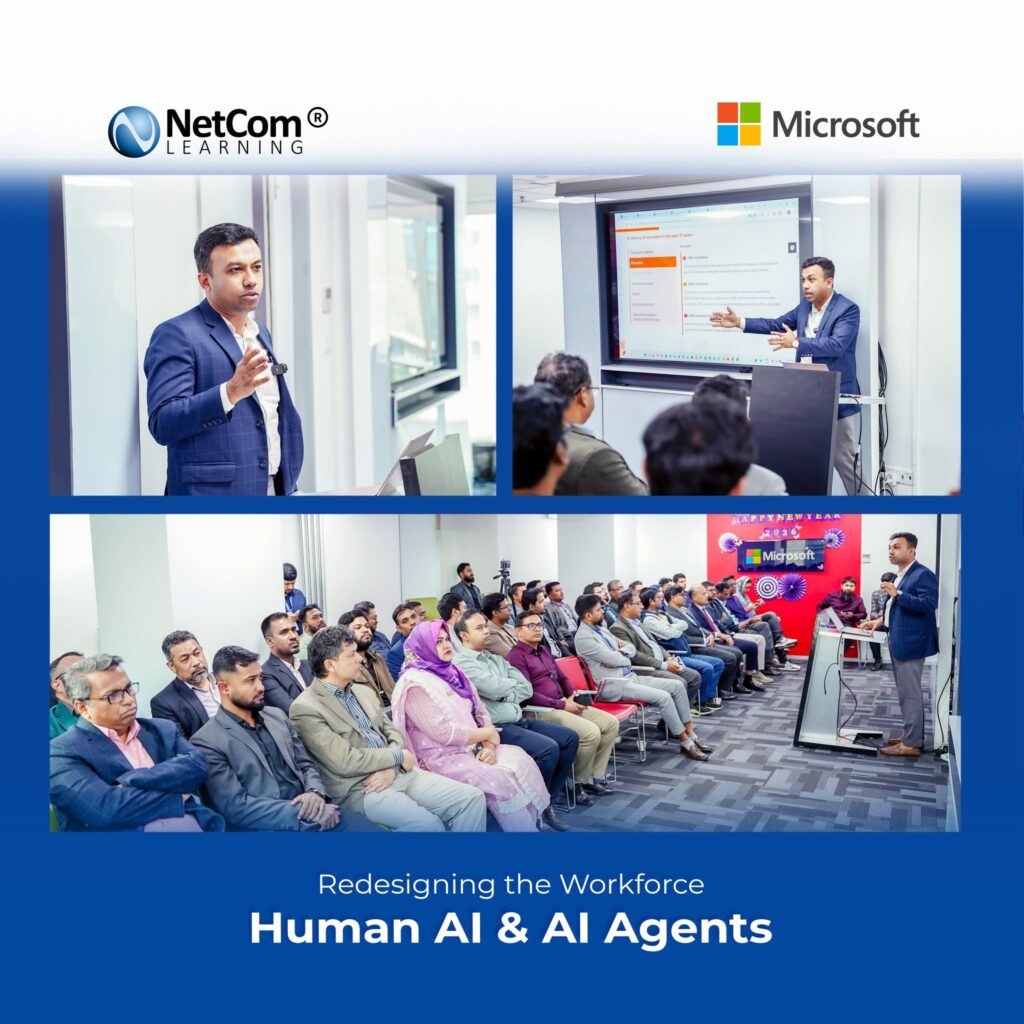
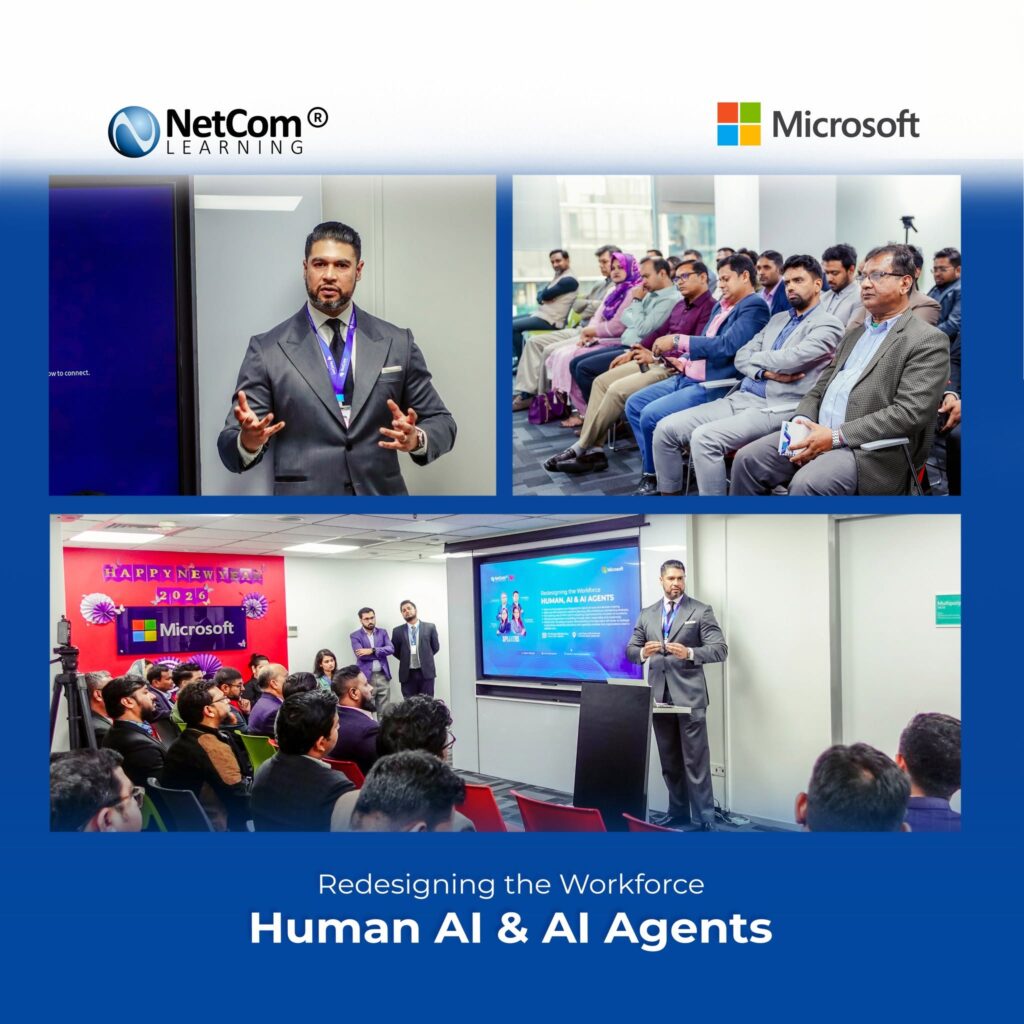
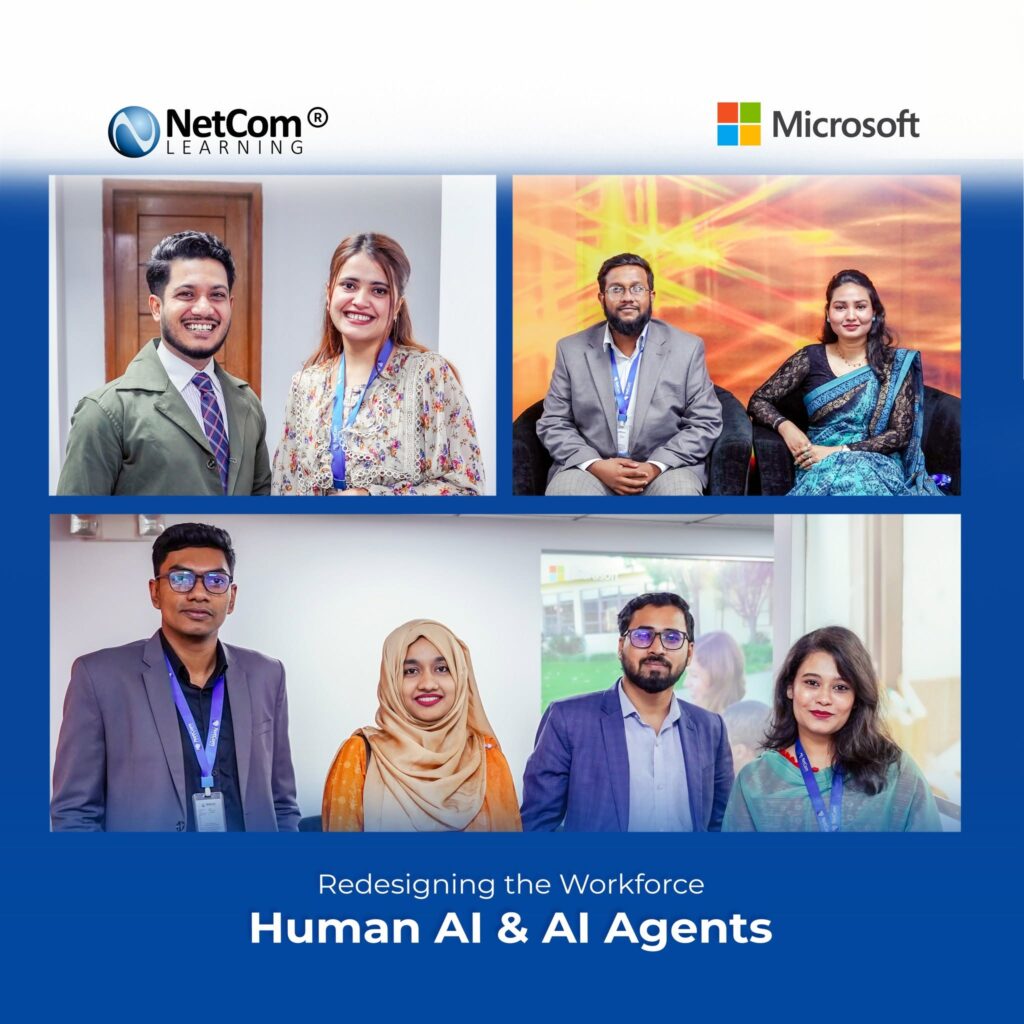
Here are a few glimpses from “Redesigning the Workforce: Human, AI and AI Agents” at the Microsoft Bangladesh office.
Leave a Reply